
This case study is a masked synthetic operating scenario, so its job is to help a barbershop decide what evidence to inspect and what work to sequence, not to imitate a claimed client win. The modeled series begins at 31 clicks and ends at 118 clicks per month while average position moves from 44 to 20. The practical reading is that clearer page ownership, technical consistency, and stronger paths to booking are handled before broader authority work. Modeled conversions move from 1 to 4 a month, but the scenario does not turn that pattern into a guarantee. A real shop should use the same decision discipline: define the page that should satisfy each local or commercial intent, repair conflicts that make that ownership unclear, and judge subsequent work against its own search, booking, and customer data.
How to Read This Barbershop SEO Scenario
Baseline and Operating Constraints
The modeled shop starts with enough organic exposure to diagnose, but not enough visibility to assume that search is already producing dependable demand. Average position begins around 44, monthly impressions near 6,200, and clicks in the low 30s. For decision-making, that combination suggests a site worth improving rather than replacing blindly: important pages are being surfaced, yet many queries remain too far from prominent positions for click behavior to be read confidently.
The scenario also assumes limited publishing capacity. That matters because a barbershop rarely benefits from creating several pages that all say nearly the same thing about booking, reviews, walk-ins, prices, or services. The better question is whether each existing page has a distinct purpose, accurate business facts, and a useful path to the next action. Unsupported superlatives, invented review claims, and other statements the shop cannot evidence stay outside the editorial plan.
The modeled link baseline begins with Domain Rating at 16, alongside 27 referring domains and 121 backlinks. Those third-party-style fields are inputs to the synthetic scenario, not independent verification of authority and not proof of ranking causation. Their decision value is narrower: the site is not modeled as starting from zero, so the plan first asks whether relevance, page ownership, crawl behavior, and internal navigation are clear before treating additional external mentions as the main constraint.
Diagnosis Before Publishing More Pages
The central diagnosis is simple: when someone searches for a barbershop, a service, a booking option, reviews, prices, or a nearby shop, is there one obvious page that best answers that need? The scenario treats that question as a prerequisite to expansion.
- Competing commercial pages. Search themes around best barbershop, reviews, booking, and walk-in availability are modeled around the main /services/barbershop destination. The decision is not to force every query onto one page, but to make each page distinct enough that users and search systems do not have to choose between several weak versions of the same commercial answer.
- Template and crawl inconsistency. Duplicate or low-priority URLs can create avoidable ambiguity. The scenario therefore treats repeated technical patterns at the template or routing level rather than fixing isolated pages while the same defect remains elsewhere.
- Indirect routes to action. Booking and appointment actions should be reachable from the pages where intent becomes commercial. The model strengthens contextual links and navigation so the visitor can move from service evaluation to the correct booking path without hunting.
The masked local destination /[city-masked]/barbershop is modeled at position 31 for its main local term. That makes it worth diagnosing because it already has measurable visibility. It does not mean every service area deserves its own page. A dedicated location page is appropriate only when it represents a genuine location and can provide useful location-specific information such as real services, hours, contact details, and booking options.
Decision Method and Evidence Guardrails
The scenario follows an order that a real barbershop can audit: confirm technical accessibility, assign important intents to clear destinations, simplify internal paths, improve the usefulness and accuracy of those destinations, and then decide whether later authority work is justified. This order is a management choice, not a claim that search engines reward a fixed recipe.
Measurement inputs
The model uses Search Console-style impressions, clicks, CTR, and average position; analytics-style conversion tracking; an average-ticket revenue layer; and third-party-style link fields. A fixed set of 16 target terms is used to observe whether the same pages are becoming more visible for the intents they are meant to satisfy. Because the evidence policy classifies the page as masked synthetic, these inputs explain how the model is organized rather than documenting access to a named client's accounts.
Priority test
A task moves earlier when it reduces ambiguity on a page that can support a real customer decision. That is why indexation conflicts, duplicate intent, and weak routes to booking are handled before broad publishing or external promotion. Digital PR enters only from month 4, once the scenario has clearer destinations that are worth reinforcing.
Editorial and search guardrails
Business descriptions, service details, author or reviewer references, and structured data should match what the barbershop can actually support on the page and in its real-world operations. Concise answer blocks may help readers and can also make content easier for Google AI features to interpret, but no special AI markup or undocumented ranking mechanism is implied. The model uses schema and editorial QA for accuracy and consistency, not as guaranteed ranking levers.
Sequence the Work So Each Stage Has a Clear Job
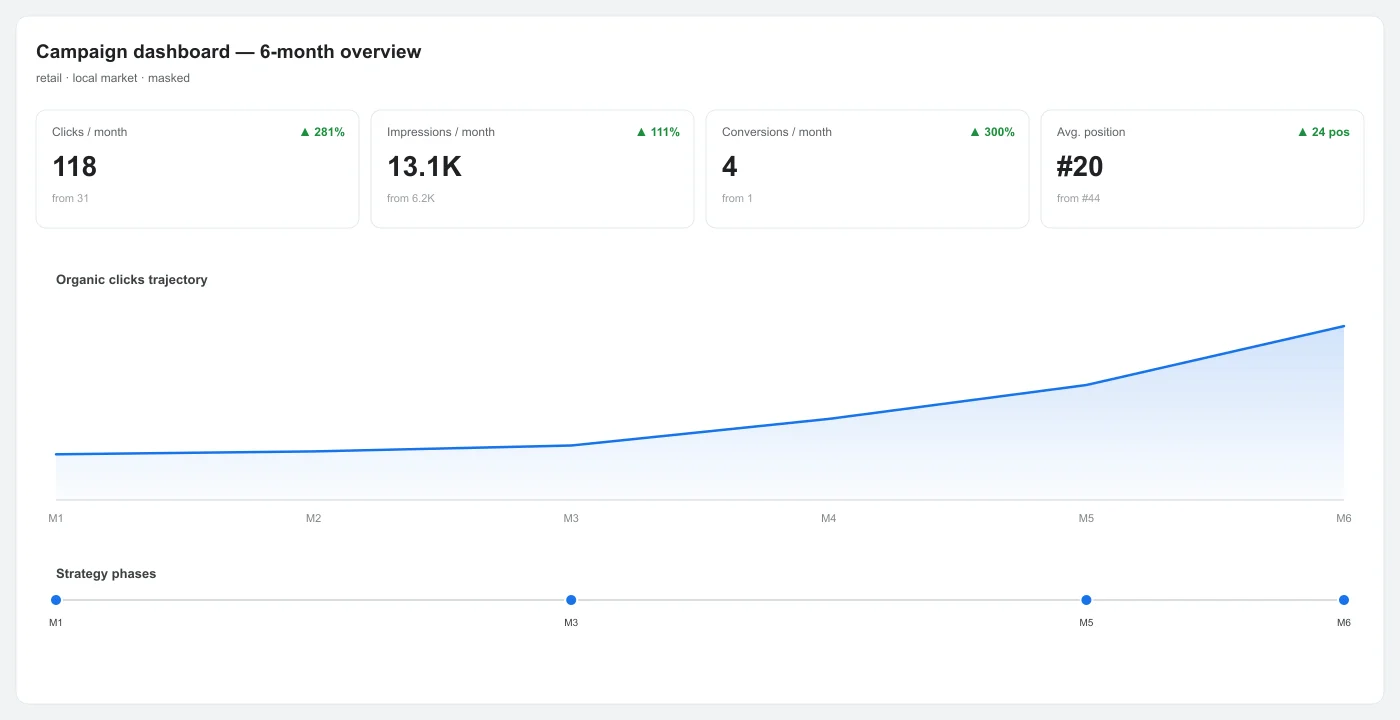
The scenario separates the work into stages so a barbershop can tell whether it is fixing discoverability, clarifying page purpose, improving navigation, or reinforcing already-useful destinations. That separation matters because overlapping changes make causal claims difficult.
Months 1 to 3: establish a dependable foundation
The Technical SEO and indexation cleanup workstream reviews crawl and indexation behavior, canonical and redirect consistency, repeated template issues, Core Web Vitals, renderability, and status-code behavior. The purpose of this stage is to remove avoidable ambiguity before publishing more. In the model, average position moves from 44.3 in month 1 to 40.8 by month 3. That movement is an internally consistent scenario observation, not evidence that the technical work produced that exact change.
Months 2 to 4: align page purpose with customer intent
The Authority content and intent alignment workstream decides which page should answer each important local, service, review, booking, or comparison need. Existing commercial pages are revised for clarity before support content is added. Proof blocks, comparison content, and FAQ sections are included only when they help a reader make a better decision and can be supported by the shop's actual information; they are not presented as required ranking components.
Months 2, 3, 5: improve architecture and internal routes
The Information architecture and internal linking workstream reduces duplicate-intent destinations, improves descriptive anchor use, and shortens useful paths to booking and appointment actions. The operating test is whether a customer and a crawler can move through the site without ambiguity about the primary page, not whether a prescribed link pattern guarantees a ranking gain.
Month 5: choose consolidation over added volume
By month 5, the scenario redirects effort from publishing volume toward pruning, updating, and reinforcing pages already tied to commercial decisions. That pivot is useful as a management example: when the constraint appears to be page quality or ownership rather than topic coverage, more pages can be a weaker choice than making existing destinations clearer.
Months 3 to 6: maintain entity clarity and add later authority work
The Entity, schema and AI-search readiness workstream keeps Organization and Service schema aligned with visible business facts, reviews author and reviewer references where they exist, and adds concise answer-ready summaries without unsupported claims. From month 4, the Digital PR, citations and link recovery workstream focuses on relevant recovered links, citations, and mentions while avoiding low-trust placements. Brand Voice and editorial QA continues throughout so business claims remain supportable. These are complementary operating practices, not documented guarantees of ranking improvement or inclusion in Google AI features.
Interpret the Modeled Results as a Diagnostic Sequence
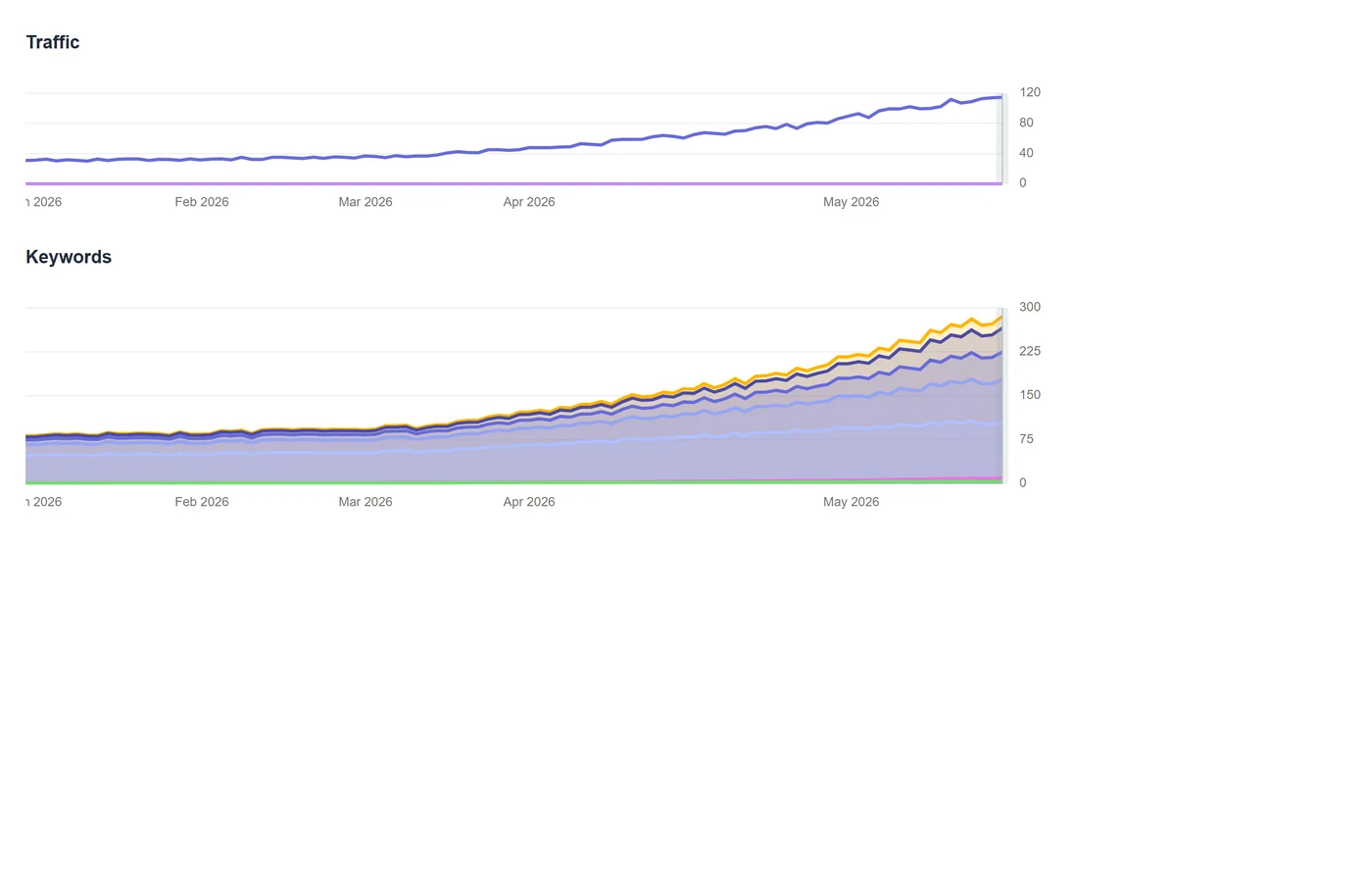
Across the synthetic series, impressions move from 6,192 to 13,079, clicks from 31 to 118, and CTR from 0.5% to 0.9%. The useful conclusion is not that another barbershop should expect the same curve. It is that the model keeps visibility, click behavior, and ranking direction aligned closely enough to ask better questions about what changed, when it changed, and which pages deserve deeper inspection.
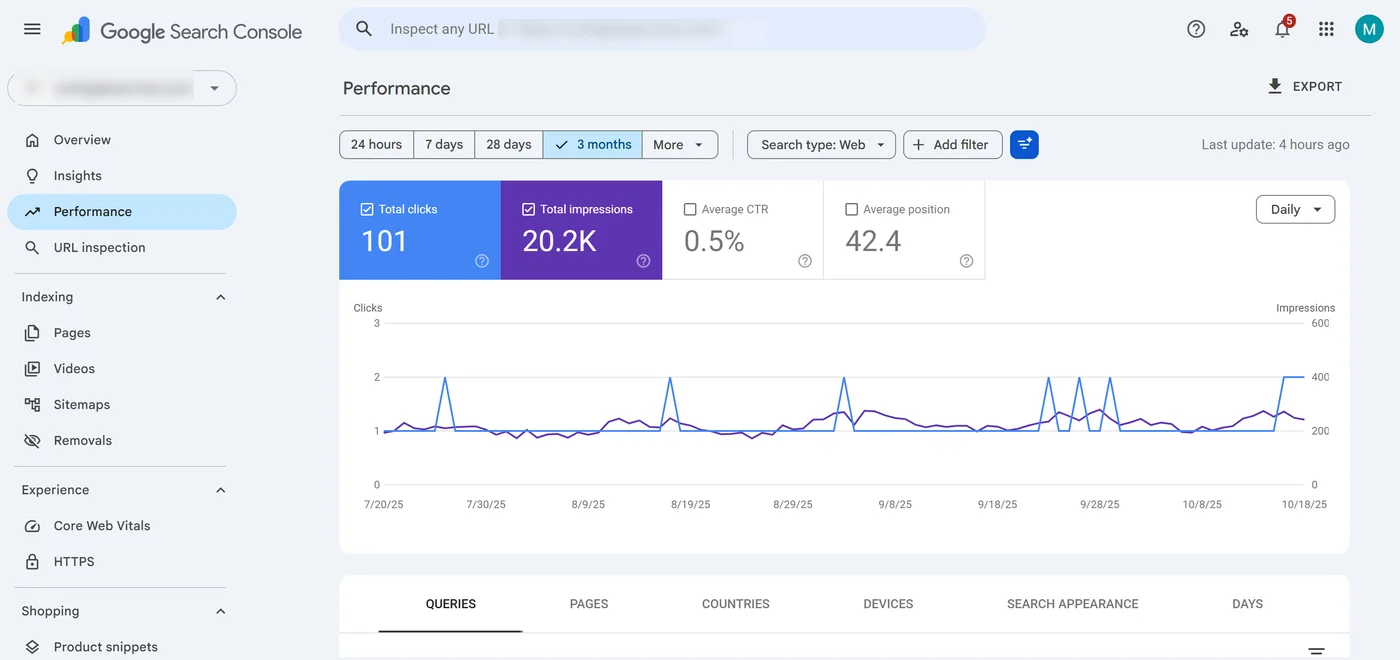
Early in the model, average position remains in the 40s while impressions increase. The more visible shift appears during months 4 and 5 as the series reaches the 30s and then the 20s. That is a useful stage distinction: the early phase is about making the site easier to interpret and measure, while the later phase asks whether clearer commercial destinations are actually earning more exposure. The sequence is illustrative and should not be treated as a universal CTR curve.
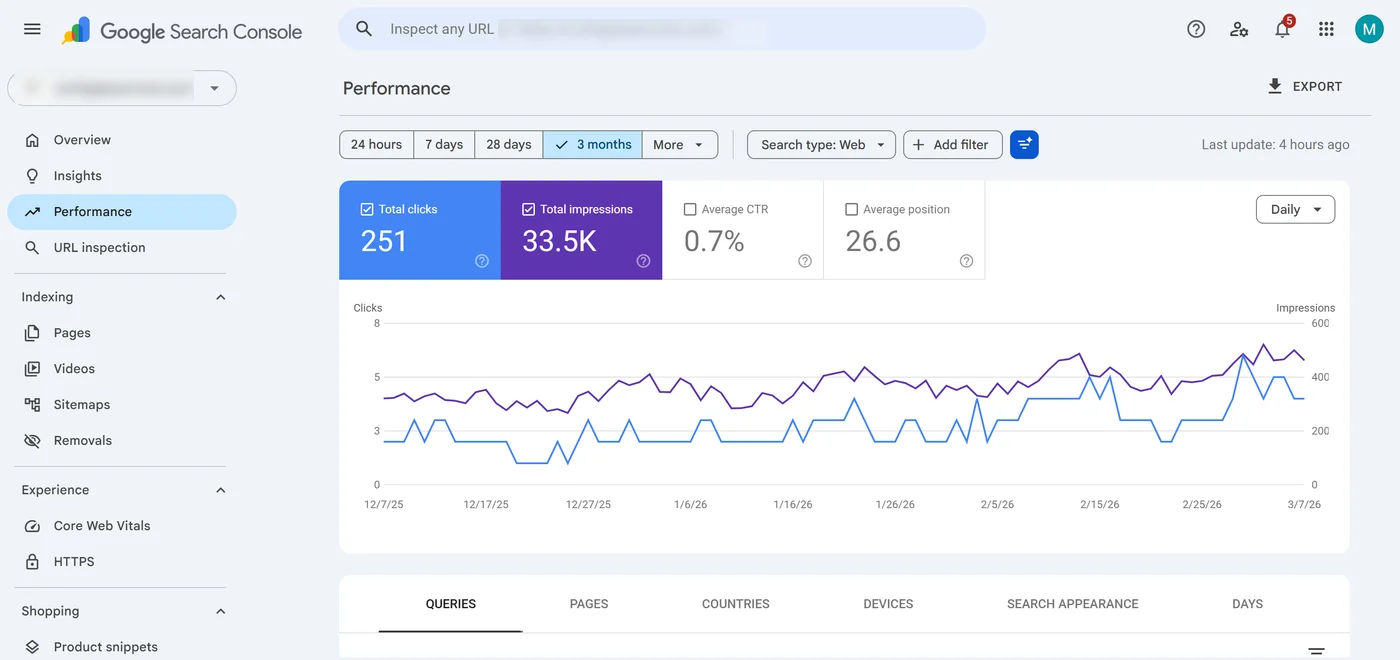
By month 6, modeled average position is 20 and clicks move from 78 to 118 month over month. In a real barbershop account, this would be the point to segment branded and non-branded queries, compare local and service-page landing pages, inspect booking actions, and check whether the growth is concentrated in commercially useful searches. Here, the values remain representative synthetic inputs rather than independently verified client results.
| Month | Impressions | Clicks | CTR | Avg position | Conversions |
|---|---|---|---|---|---|
| 1 | 6,192 | 31 | 0.5% | 44.3 | 1 |
| 2 | 6,595 | 33 | 0.5% | 42.5 | 1 |
| 3 | 7,367 | 37 | 0.5% | 40.8 | 1 |
| 4 | 9,232 | 55 | 0.6% | 35.0 | 2 |
| 5 | 11,181 | 78 | 0.7% | 27.4 | 3 |
| 6 | 13,079 | 118 | 0.9% | 20.0 | 4 |
Use Keyword Movement to Check Page Ownership, Not to Chase Every Query
The keyword set is most useful as a map of intent. A barbershop should ask which terms describe local discovery, which describe service evaluation, and which indicate a booking or timing need. The scenario then checks whether the page assigned to each group is becoming clearer rather than creating a new page for every variation.
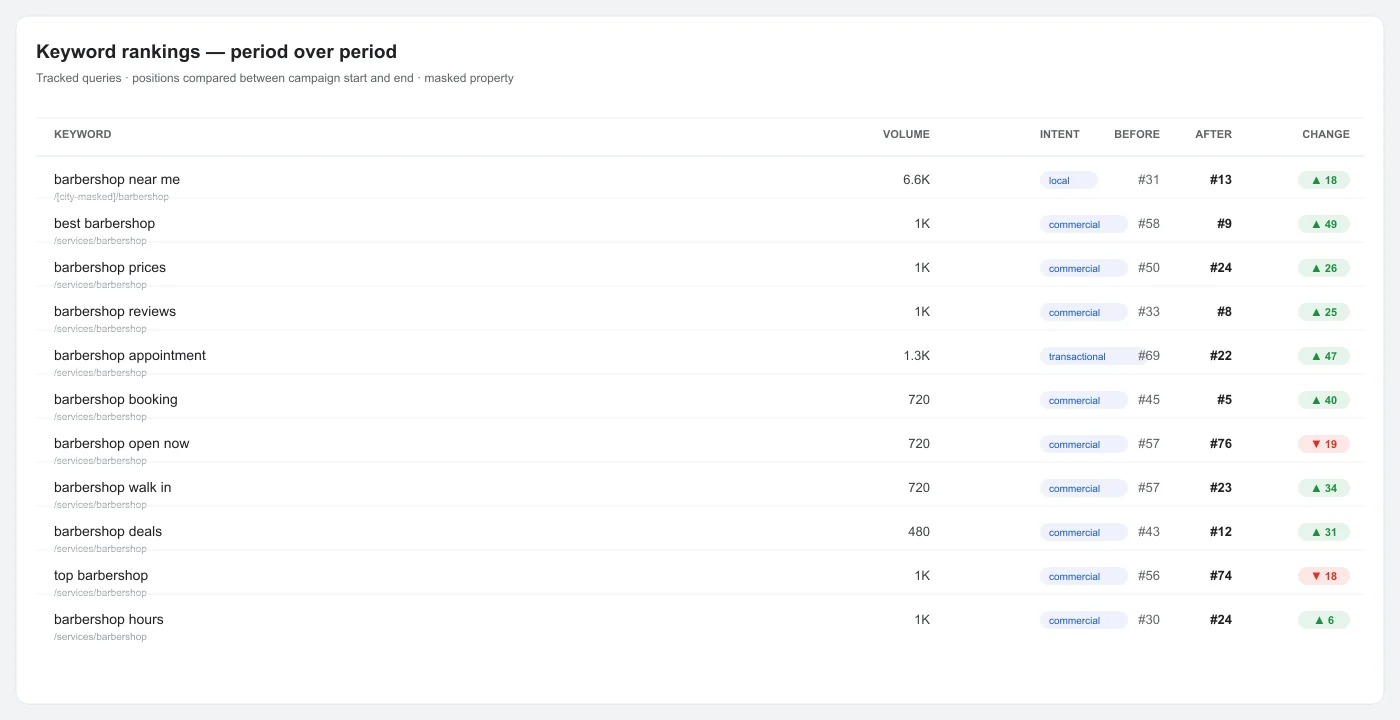
Within the synthetic series, local barbershop moves from 59 to 7, best barbershop from 58 to 9, barbershop reviews from 33 to 8, and barbershop booking from 45 to 5. The common decision thread is that these queries sit close to discovery or evaluation, so the model gives them clear destinations and measures them consistently. Their movement is compatible with the consolidation approach, but it does not establish that consolidation caused each ranking change.
The primary local term, barbershop near me with modeled volume 6,600, moves from 31 to 13. Leaving that term outside the top results is useful because it prevents the scenario from assuming that the broadest local query must become the main success story. A real shop should also compare this term with branded searches, neighborhood language, Maps visibility, and the landing pages that actually produce booking actions.
| Keyword | Volume | Intent | Mapped page | Before | After | Category |
|---|---|---|---|---|---|---|
| barbershop near me | 6,600 | local | /[city-masked]/barbershop | 31 | 13 | winner |
| local barbershop | 880 | local | /[city-masked]/barbershop | 59 | 7 | winner |
| best barbershop | 1,000 | commercial | /services/barbershop | 58 | 9 | winner |
| barbershop reviews | 1,000 | commercial | /services/barbershop | 33 | 8 | winner |
| barbershop booking | 720 | commercial | /services/barbershop | 45 | 5 | winner |
| barbershop deals | 480 | commercial | /services/barbershop | 43 | 12 | winner |
| barbershop appointment | 1,300 | transactional | /services/barbershop | 69 | 22 | winner |
| barbershop walk in | 720 | commercial | /services/barbershop | 57 | 23 | winner |
| barbershop prices | 1,000 | commercial | /services/barbershop | 50 | 24 | winner |
| barbershop specials | 720 | commercial | /services/barbershop | 65 | 26 | winner |
| barbershop hours | 1,000 | commercial | /services/barbershop | 30 | 24 | winner |
| barbershop membership | 720 | commercial | /services/barbershop | 53 | 36 | volatile |
| affordable barbershop | 720 | commercial | /services/barbershop | 53 | 51 | stable |
| barbershop open now | 720 | commercial | /services/barbershop | 57 | 76 | decliner |
| top barbershop | 1,000 | commercial | /services/barbershop | 56 | 74 | volatile |
| barbershop services | 140 | commercial | /services/barbershop | 59 | 72 | decliner |
The declining and flat terms are important because they keep the model decision-useful. barbershop open now is heavily dependent on real-time local context such as current opening status and Maps results, so the scenario does not invent a dedicated service page merely to target it. top barbershop overlaps closely with the stronger evaluation language already assigned to the main commercial destination, so some query drift is accepted. affordable barbershop changes only from 53 to 51, which is another reminder that a coherent strategy does not require every tracked term to improve.
Connect Search Movement to Booking Data Before Calling It Business Impact
The business layer is deliberately modeled rather than presented as reconciled revenue. Conversions move from 1 per month to 4 per month, and the average-ticket model maps that from 45 to 180 in monthly revenue. That is a 4x change inside the scenario, but it is not an ROI result because the model does not include full booking records, cancellations, payment reconciliation, repeat visits, channel overlap, or other accounting inputs a real shop would need.
By month 6, the synthetic click mix is increasingly centered on booking, appointment, review, and local discovery terms. For a real barbershop, the next decision would be to connect those landing pages with completed booking events and compare the quality of the traffic rather than celebrating click growth alone. Search performance is most useful when it can be traced to customer actions with enough data to explain the path.
The modeled business is single-location, which keeps local demand constraints visible. barbershop near me sits at 13 while other transactional terms remain in the low 20s. Those positions simply identify where the model still has headroom to investigate. They are not promises about what a real shop can reach, and they do not justify creating nominal location pages that lack genuine location-specific value.
Where the Evidence Stops
A decision-useful case study needs explicit boundaries, especially when the underlying metrics are synthetic.
- Revenue is directional. The scenario applies an average-ticket value to tracked conversions, so the output is a modeling aid rather than accounting-grade revenue. A real barbershop would need booking and payment reconciliation before using the figure for ROI decisions.
- CTR remains modest. Even at 0.9% in month 6, the series represents a site only recently moving into more visible ranges. That can illustrate why position and query mix deserve joint review, but it cannot predict the effect of a competitor, interface change, or search update on another shop.
- Not every query improves. Some tracked terms remain volatile or decline. That is useful because it forces the operator to distinguish meaningful customer intent from a dashboard goal of making every keyword move upward.
- Later work is not isolated. Links and schema are added in months 4 to 6, but the source has no controlled design that isolates their contribution after the month-6 reporting window. Any later effect would require new evidence rather than assuming that those inputs caused or will continue the modeled trend.
Separate Timing From Causation
The scenario is useful for comparing what happened before and after specific decisions, but it cannot establish causal effects because the metrics are synthetic and the workstreams overlap.
Technical cleanup comes first in the sequence. During months 1 to 3, the modeled series moves from 44.3 to 40.8 before broader commercial content work is fully underway. The timing supports a reasonable hypothesis that cleaner technical conditions make later evaluation easier, but it does not prove that the cleanup caused the movement.
Intent alignment accompanies stronger visibility on commercial terms. Once overlapping themes have clearer owning pages, modeled rankings that had been in the 40s and 50s move closer to prominent result ranges. That association supports the scenario's decision to reduce overlap, while still leaving room for other changes in query mix, competition, and search behavior.
Internal linking is evaluated alongside click behavior rather than in isolation. As contextual routes to important pages become clearer, modeled CTR moves from 0.5% to 0.9%. A real analysis would need to separate the effect of position, snippets, query mix, brand demand, and device context before assigning credit to internal linking.
External authority work is later reinforcement. DR moves from 16 to 21 and referring domains from 27 to 37 while the broader scenario is already improving. Because link recovery, citations, content updates, and architecture changes overlap across months 5 to 6, the series cannot justify claiming that links caused the later acceleration.
The production pivot remains a decision example. In month 5, the model stops adding volume, and clicks then move from 78 to 118 in the final month. That sequence is compatible with the idea that consolidation was a better use of effort at that stage, but without a controlled counterfactual it cannot prove that pausing production was the sole lever.
Decisions to Carry Into a Real Barbershop
- Fix ambiguity before expanding coverage. When indexation rules, duplicate intent, or page purpose are unclear, publishing more can make diagnosis harder. Resolve the conflict first, then add a page only when it serves a distinct customer need.
- Map important searches to useful destinations. A service page, booking path, review context, or genuine location page should have a clear job. Merge, redirect, or differentiate competing pages when users would otherwise receive substantially the same answer.
- Treat the month 5 pivot as a prioritization example. The scenario shifts effort from production toward pruning, updating, and reinforcement because its modeled constraint changes. A real shop should make that choice only after checking its own page performance and business goals.
- Measure actions near the decision. Rankings and clicks are intermediate signals. Booking starts, completed appointments, calls, direction requests, and other relevant actions should be connected to landing pages where the available data allows it.
- Protect trust while improving visibility. Keep hours, services, staff or barber information, location details, prices where published, and booking instructions accurate. Ask eligible customers consistently for honest feedback without incentives, discouraging negative reviews, or selecting only satisfied customers.
The aim is not to manufacture signals but to make the shop easier to verify and choose across Google Maps, organic results, directories, branded searches, and Google AI features when those surfaces appear.
For operators with multiple genuine locations, create a dedicated location page only when it represents a real place and can provide useful location-specific information such as actual hours, services, contact details, and booking options.
Ongoing audits should look for contradictions between the site, profiles, and directories, while review requests should go consistently to eligible customers for honest feedback without incentives, review gating, or pressure to suppress negative experiences.