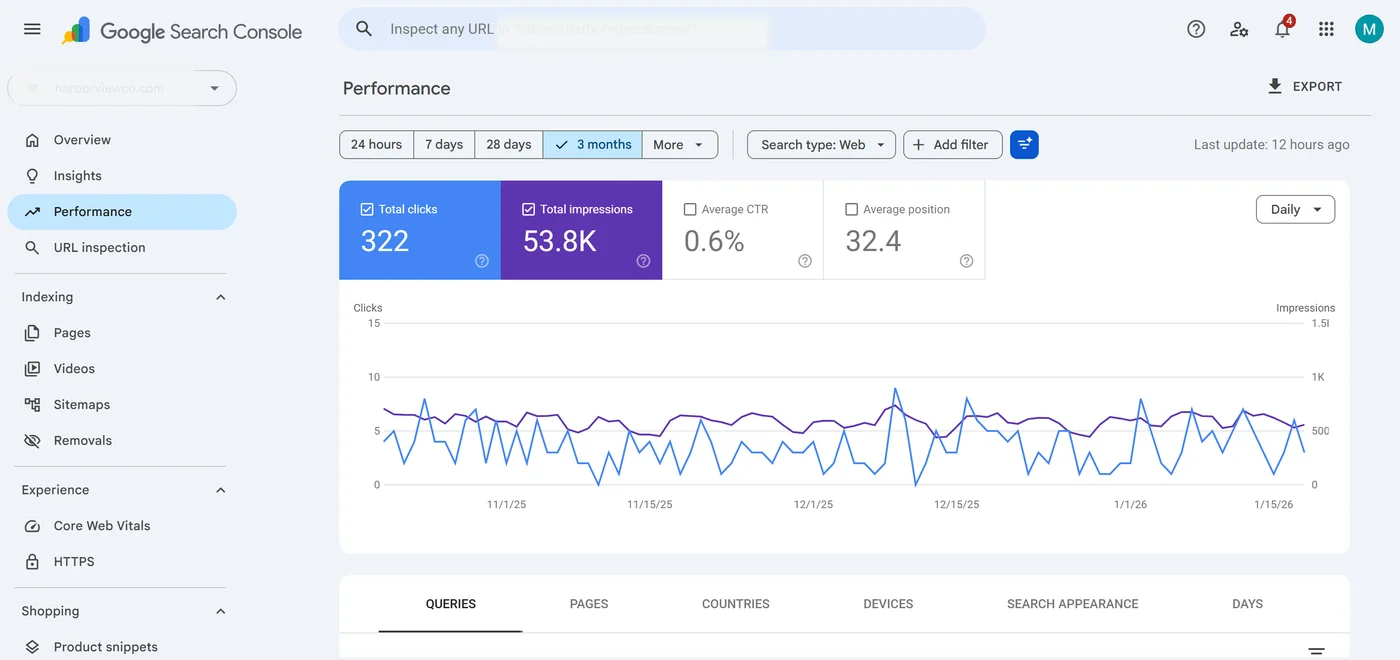
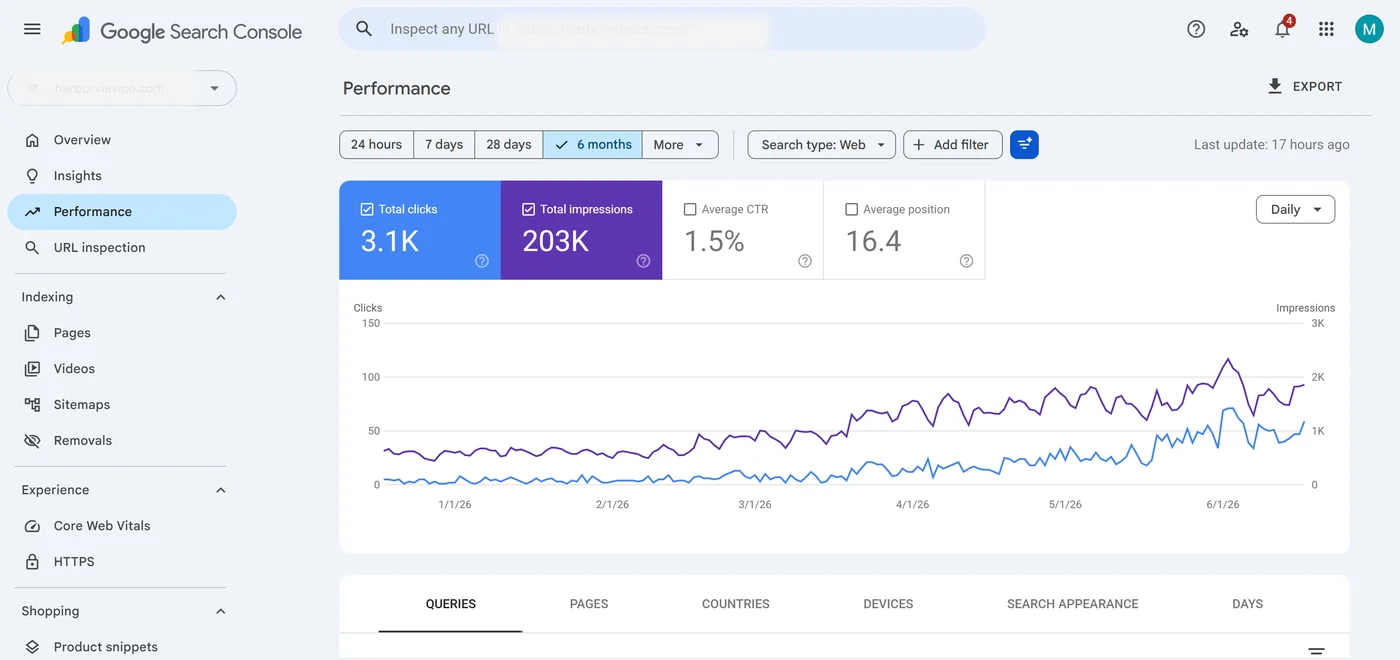
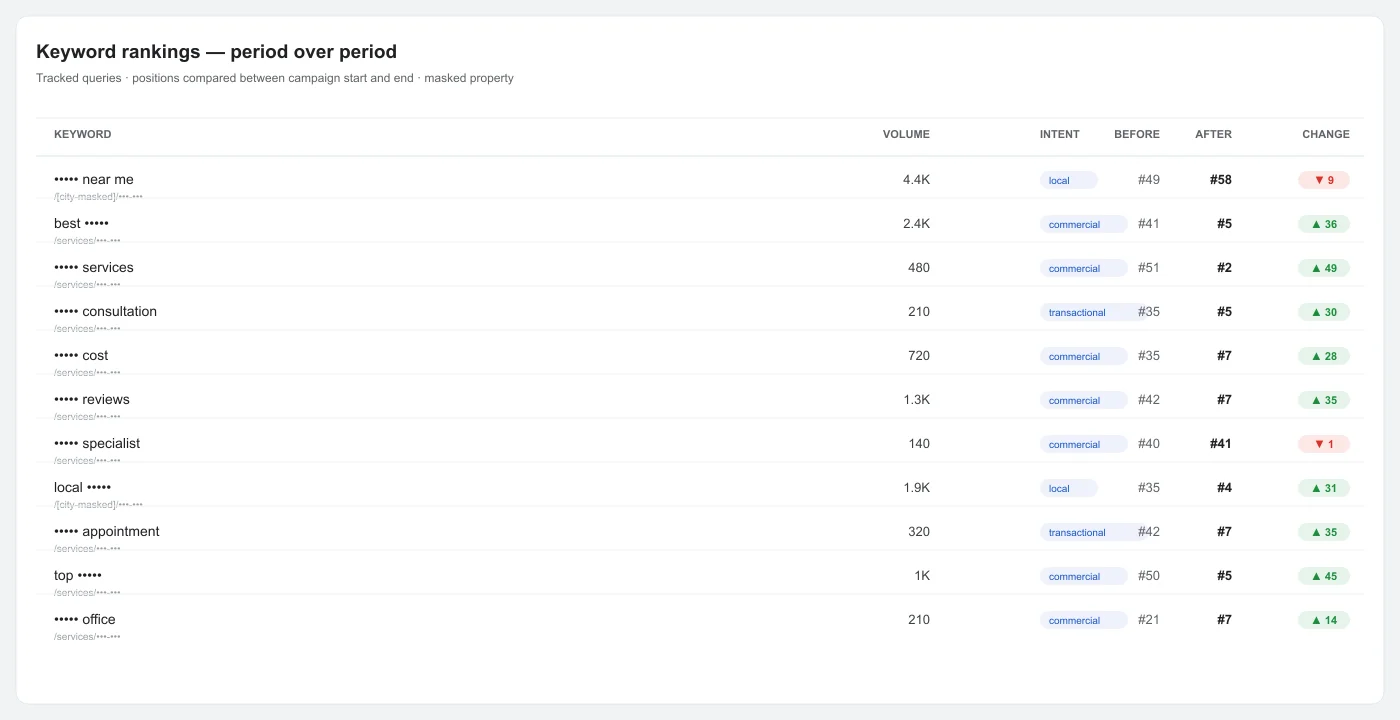
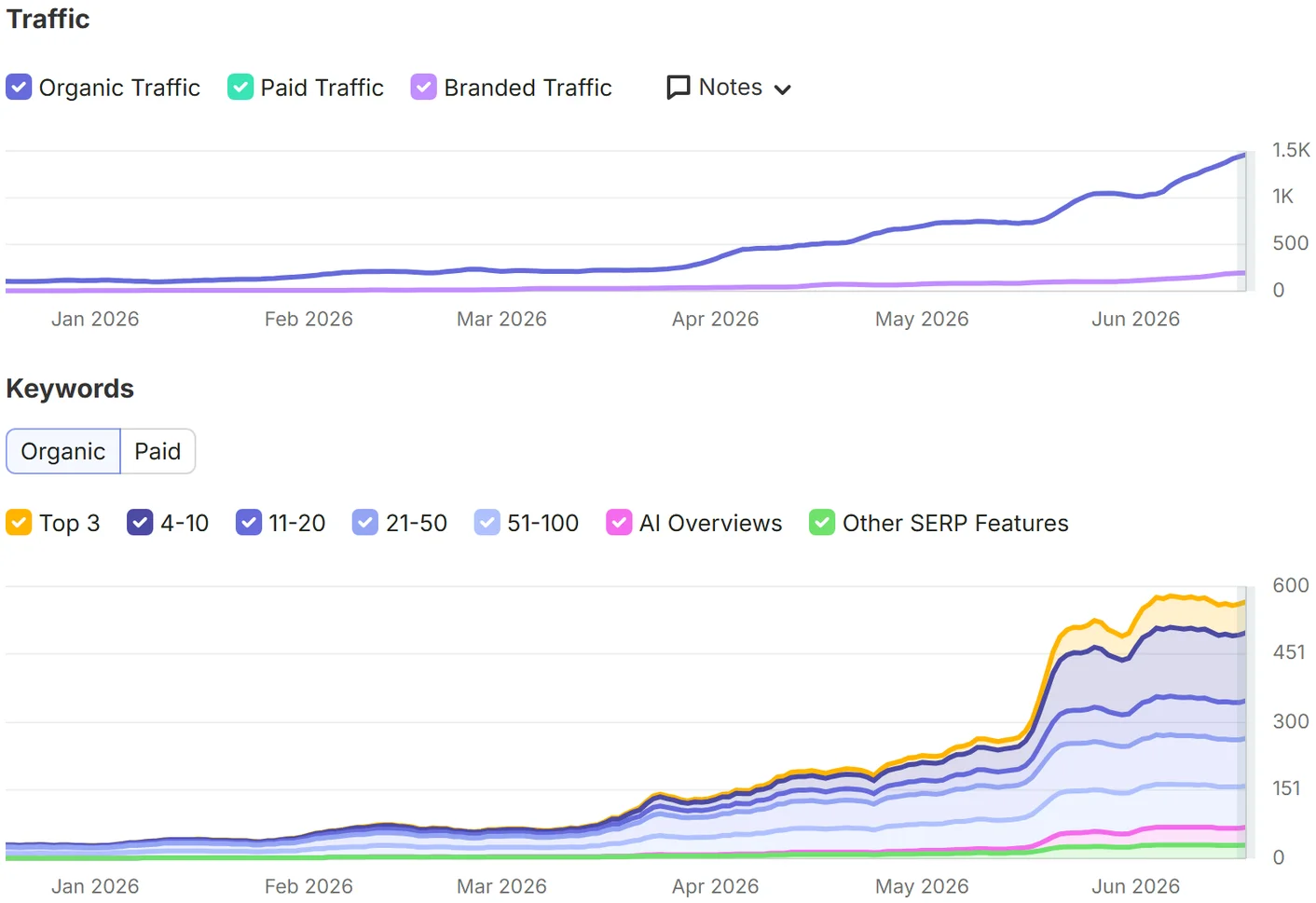
The sequence was deliberate: fix the foundation before scaling anything, then build topical authority through informational content, and only reinforce with links once the pages deserved them.
Foundation first (technical SEO)
In months one through three the work covered crawl and indexation triage, canonical and redirect cleanup, template-level duplication fixes, and schema and internal status-code validation. The point was not vanity technical scores. It was to stop the site fighting itself before adding weight to it. Scaling content onto a broken template just multiplies the problem, so priority templates were fixed first.
Topical authority as the core engine
This is where the real work lived. Informational content was the core workstream, and the theory of the case was simple: a deep, well-organized library of informational articles earns topical authority and internal-link equity, and that equity is what lifts the commercial money pages into positions they could never hold on their own.
The library grew to 32 articles across 7 topic clusters over the six months, cadence rising from 4 articles in month one to the full 32 by month six. The clusters mapped to how parents actually research childcare:
- Early childhood development and daily routines
- Safety, staffing ratios and licensing
- Enrollment, waitlists and scheduling
- Cost, subsidies and payment options
- Health, nutrition and illness policies
- Curriculum and learning approaches
- Choosing and comparing providers
The measurable effect showed up in the internal topical authority index, which climbed from 23 to 60 across the six months, and in informational keyword coverage that reached 464 terms by the end. Each cluster wrapped around and linked into the relevant money page, so authority earned by an informational article on staffing ratios flowed into the commercial services page through contextual internal links.
Architecture and internal linking
A hub-and-spoke structure was mapped, anchor text distributed sensibly, cannibalizing pages consolidated, and orphan and weak pages pruned. Shortening the path to conversion pages was a specific goal: parents who read a guide should be one clear click from booking.
Entity, schema and AI answer readiness
Organization and Service schema were cleaned up, author and reviewer entities aligned, and citation consistency checked. Answer-ready summary blocks were also written to be quotable by AI assistants, without a single claim that outran the evidence on the page.
Digital PR and editorial QA
Link work came late, in months four through six, once the pages were worth linking to. The work recovered lost links, cleaned citations, and pursued relevant industry mentions within plausible monthly caps. Throughout, brand voice and editorial QA kept claims inside approved boundaries, which is non-negotiable for a childcare business.
Data sources: Search Console for clicks, impressions, CTR and position; analytics for sessions and conversions; a third-party tool for domain rating, referring domains and visibility; and an internal topical authority index. Revenue is modeled on an average job value, not pulled from CRM records.