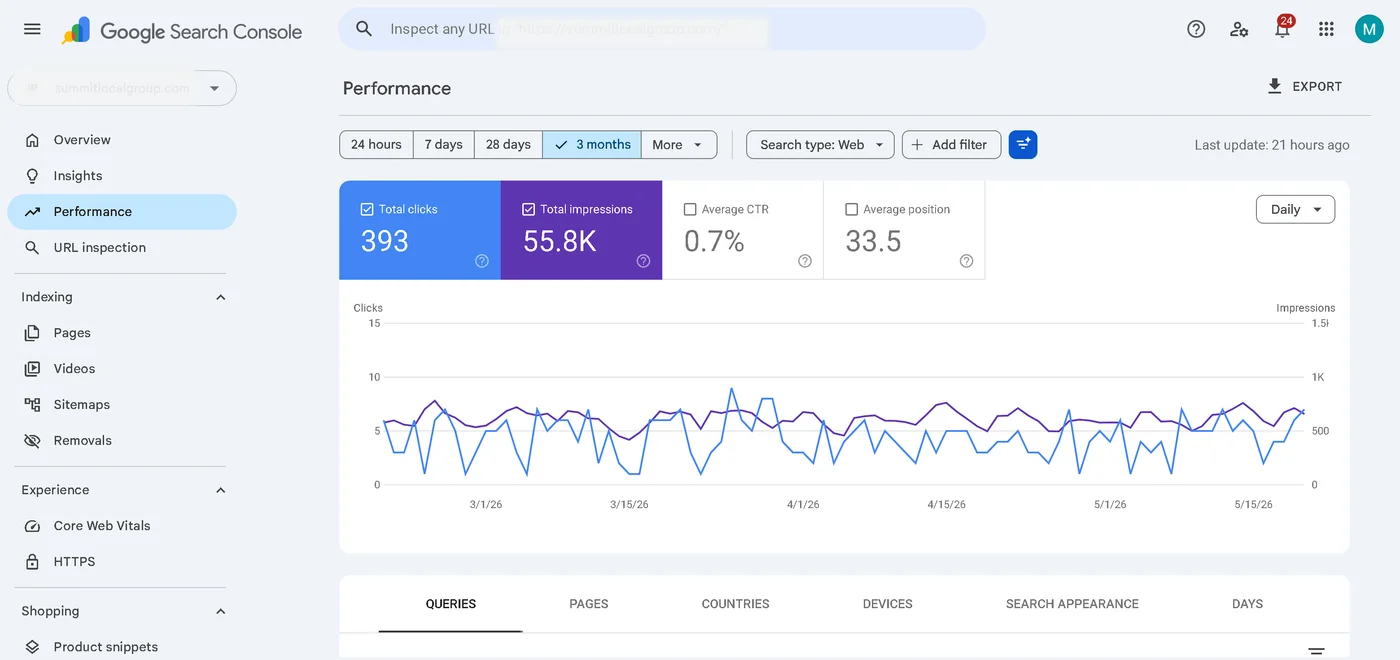
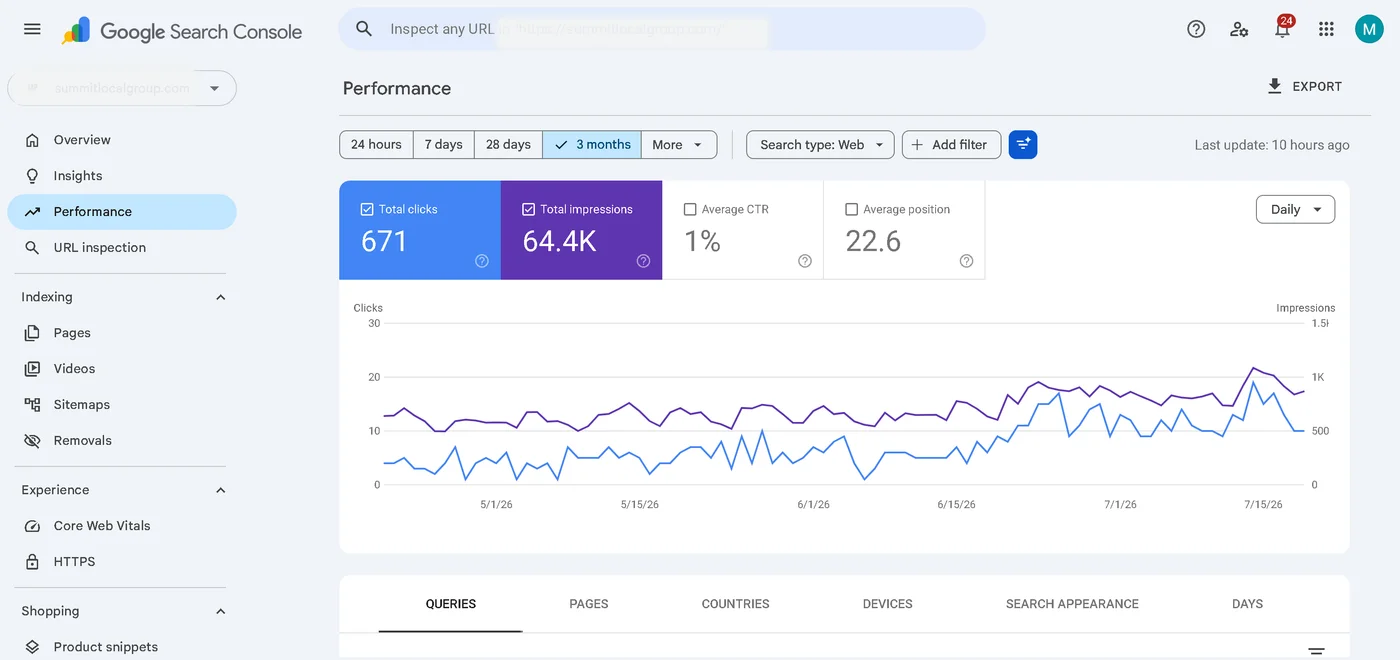
The operating rule was simple: correct ambiguity before trying to amplify the site. That kept the work focused on page ownership, internal architecture, evidence quality, and then selective growth.
Opening stage: inventory and intent mapping
The team crawled the indexable site and classified URLs by whether they should remain, merge into a stronger page, or be removed from search. Template canonicals were reviewed, low-value parameter and archive patterns were addressed, and internal 302 redirects and soft-404 responses were corrected where they complicated navigation or link flow. Rendering and Core Web Vitals were checked as part of technical QA; because no material rendering blocker was recorded, the engagement did not turn into a speed project.
At the same time, tracked queries were mapped to intended destination pages. For each query family, the team recorded what kinds of results appeared and whether the likely reader needed clinical information, local logistics, comparison help, or a consultation path. The purpose was not to reverse engineer an undocumented ranking system. It was to make the site's own information architecture explicit enough that every later content and link decision had a clear destination.
Middle stage: one primary page for each commercial intent
The overlapping commercial cluster was consolidated so that the main service page handled the core service intent while the city page remained focused on genuine local information. The thin comparison page and stale article were redirected with 301 responses into the surviving service destination. The consultation path was also shortened so that a reader arriving with booking intent could find the request action without navigating through unrelated material.
Internal links were rebuilt around topic relationships. Informational pages linked to relevant hub material, and hubs linked onward to the service or local page when that destination genuinely answered the next decision a reader might make. Anchor text stayed descriptive and varied rather than forcing the same exact phrase across the site.
Support content: reviewed topic coverage, not keyword scatter
The content plan was organized around patient decision areas rather than a long list of isolated phrases. The final library covered mechanisms and treatment-category context, candidacy and screening, safety and sourcing questions, metabolic applications, recovery and performance questions, and cost and consultation logistics.
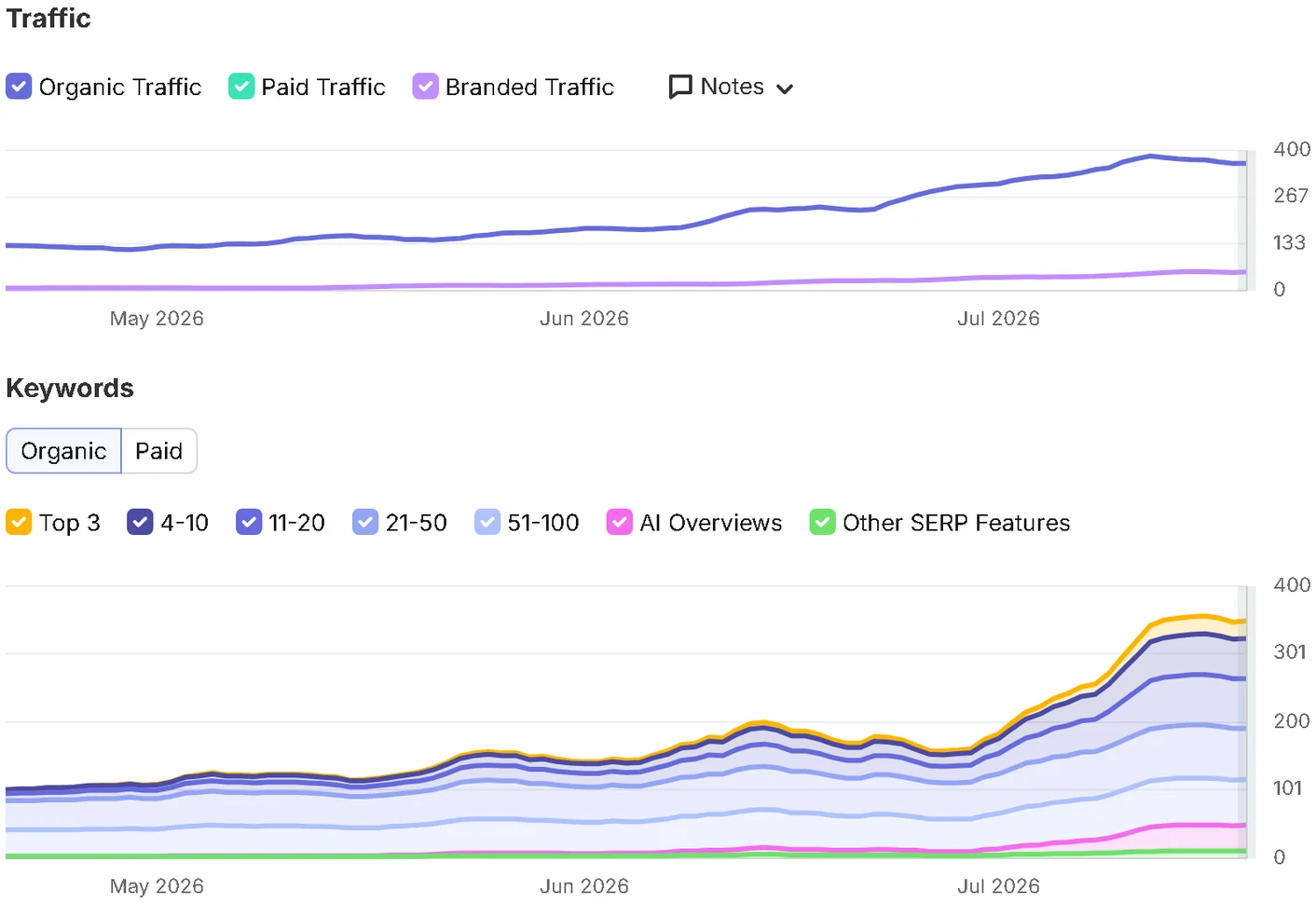
As publication progressed, the internal topical index recorded by the project moved from 28 to 41 to 52, and 367 informational queries were ranking by the end of the engagement. That index is an internal measurement, not an official Google metric. Its value here is as a consistent project-side indicator of how much of the planned subject area had been covered.
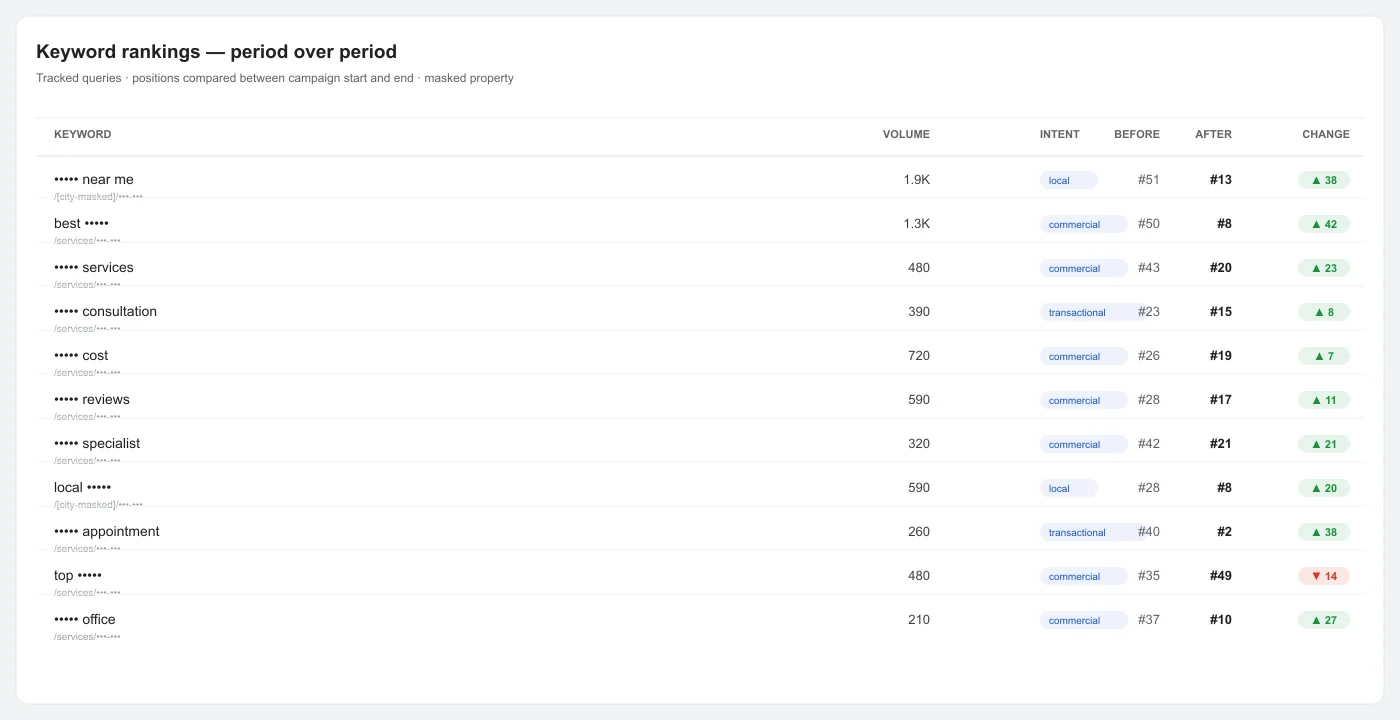
The working hypothesis was that useful informational coverage plus contextual internal linking would make the commercial pages easier for both readers and search systems to place within the site's subject structure. The strongest tracked example was a commercial term whose destination moved from 50 to 8 while the supporting architecture was being rebuilt. Because multiple workstreams changed during the period, this movement should be treated as an observed result, not proof that topic clusters alone caused it.
Editorial controls for health content
Approved patient-facing material was sampled to establish tone and claim boundaries before new copy was drafted. Reviewers checked for outcome promises, unsupported comparative claims, and language that went beyond the clinic's approved evidence. Draft wording that crossed those boundaries was revised at review stage before publication.
This is a transferable practice for any health site: SEO production should not outrun the organization's evidence and review process. A useful page can explain what the clinic offers, what a consultation may involve, and what questions a patient should ask without promising a clinical result or presenting uncertain material as settled fact.
Answer surfaces and entity consistency, added after architecture
Later in the engagement, Organization and Service schema were cleaned up, practitioner references were aligned across page content, and concise summary blocks were added near the top of selected hubs. The purpose of those summaries was reader utility and clear attribution. A reader looking for a concise answer should not have to scan 900 words before finding it. They may also be easier for Google AI Overviews or other AI features to quote when relevant, but there is no special markup requirement and no guarantee that a search system will select them.
The sequencing matters. Structured data can help describe a page, but it does not fix unclear page ownership. The team therefore used it after the underlying destination and content relationships were already clearer.
Authority work: limited and late
Link-related work focused on recovering broken references from earlier migrations, correcting inconsistent citations, and selective outreach. Referring domains moved from 22 to 28 to 32 and total backlinks from 103 to 137 during the recorded period. Some placement opportunities were also declined.
That modest movement is important when interpreting the study. With domain rating at 19 at the start, authority growth remained relatively small compared with the scale of the recorded ranking changes. That makes links an unlikely standalone explanation for the full result, while still leaving open the possibility that they contributed alongside the architecture and content work.
Do not copy the page count or publishing schedule blindly. Copy the sequence of questions: which URL should own each patient intent, which pages add distinct value, which claims can be supported, where should internal links guide the reader next, and which metrics will be used to judge whether the work improved visibility and consultation demand. If a genuine location has useful location-specific information, a dedicated page can make sense. A nominal service area alone is not enough reason to create another local page.