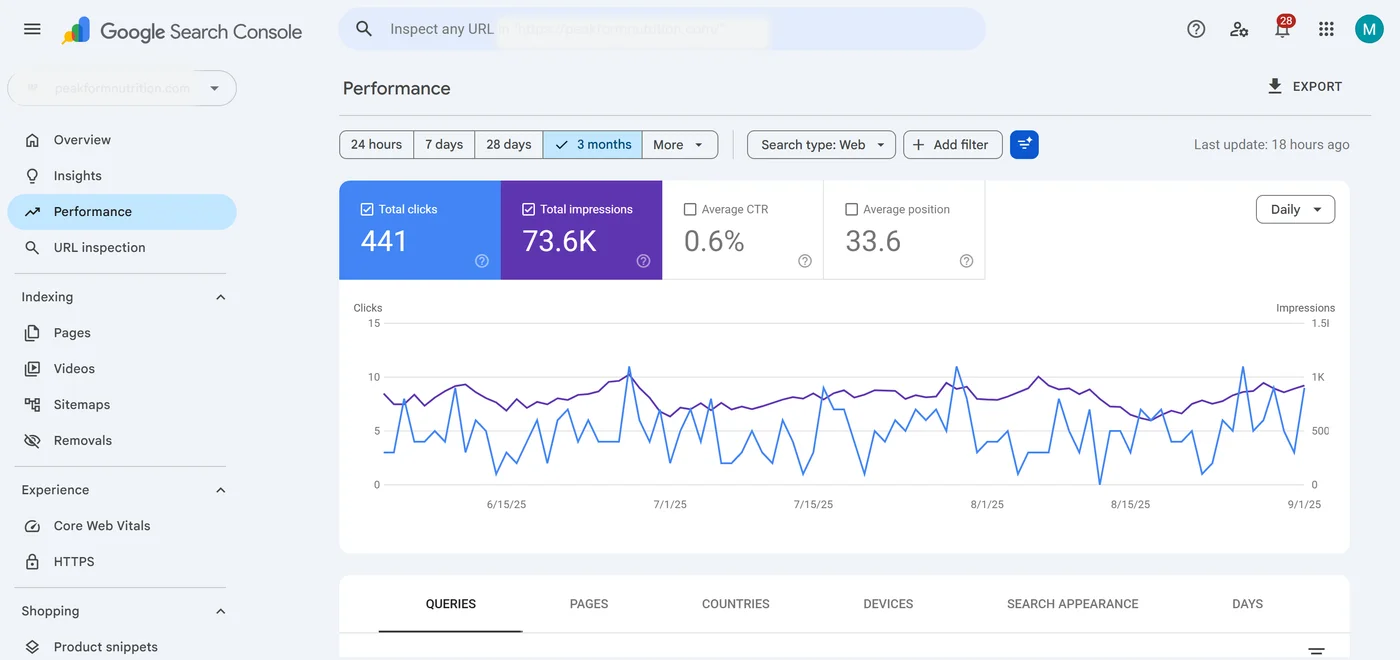
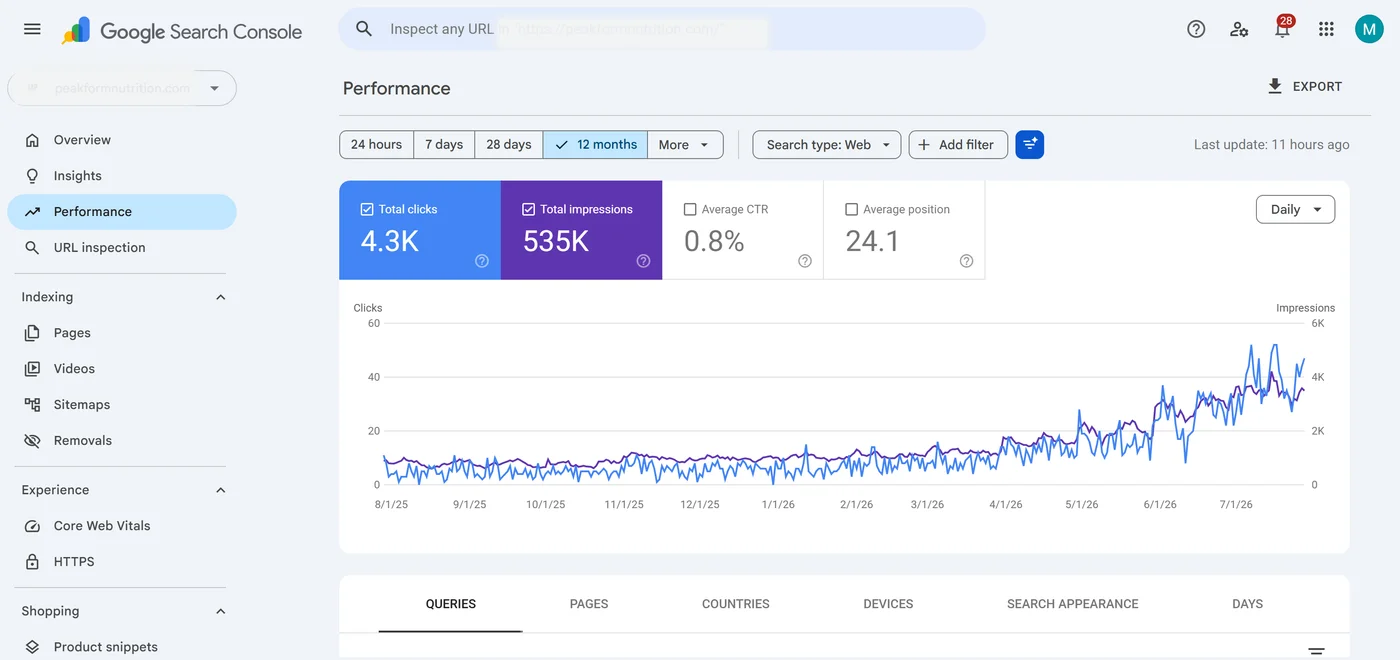
The opening technical pass focused on making the existing site easier to interpret before new content was added. URL inventory, index status, canonicals, redirects, duplicate template text, renderability, and status codes were reviewed. The work completed in month 1 was treated as foundation work rather than as a traffic claim: it reduced avoidable duplication and made later URL-level observations easier to read.
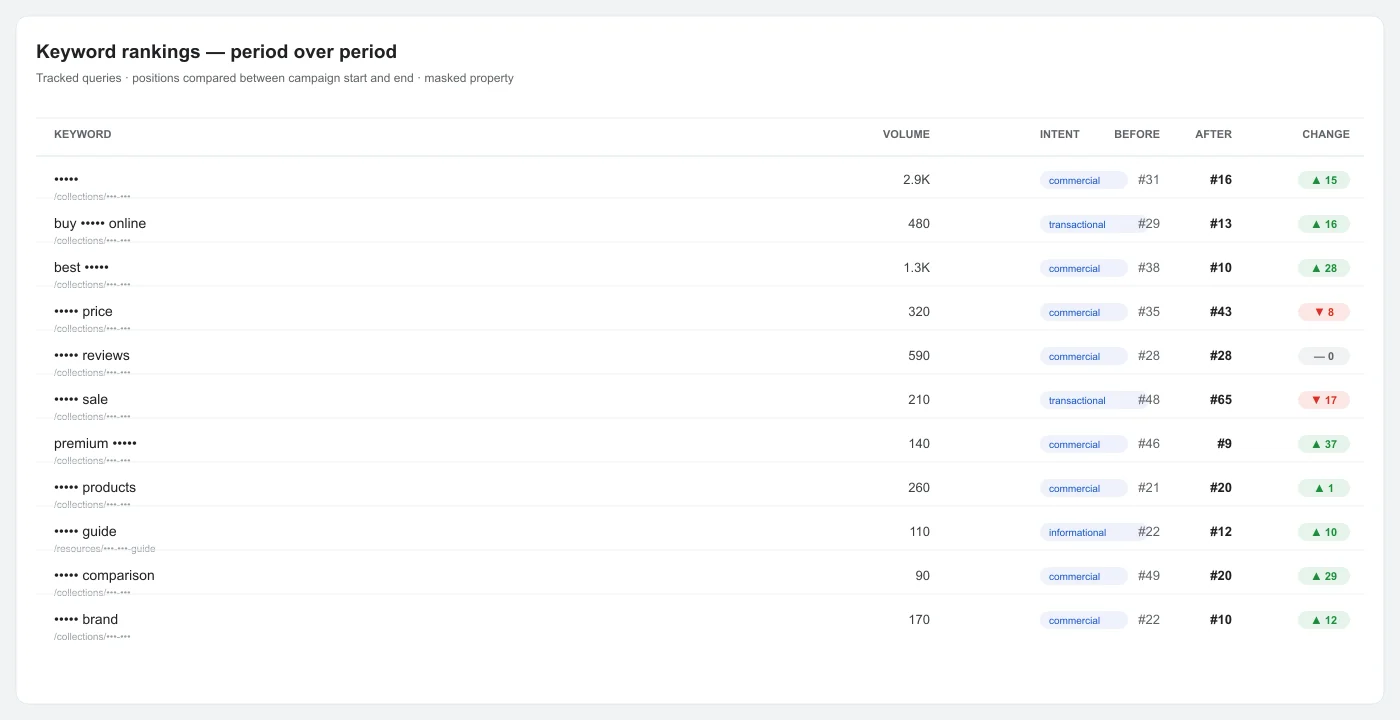
At the same time, tracked queries were assigned to intended destination pages after reviewing the live result types. The key editorial decision was to stop treating each collection variation as a separate opportunity when several were serving the same purchase intent.
Consolidate the commercial destination before expanding it
In month 3, the strongest collection URL became the primary commercial destination. Variant pages were redirected where appropriate, internal links were pointed toward the surviving URL, and the page itself was reorganized to cover product selection, documentation, shipping, handling, comparison, and policy questions in one coherent place. The purpose was clarity, not a promise that consolidation by itself would produce a ranking gain.
Month 5 prompted a second pass. Thin promotional URLs were still appearing for overlapping commercial queries, so those pages were either removed or redirected according to their existing value. Publishing slowed in month 6 while the team reconciled internal links and confirmed that support content pointed to the intended commercial destination.
Build research coverage that supports, rather than duplicates, purchase intent
The support library was organized into 10 topic clusters and finished with 89 articles. The subjects stayed on informational ground: terminology, documentation and testing records, storage and handling, measurement language, product-category explanations, equipment and accessories, shipping and cold-chain considerations, regulatory and research-use status, literature summaries, and comparison guidance.
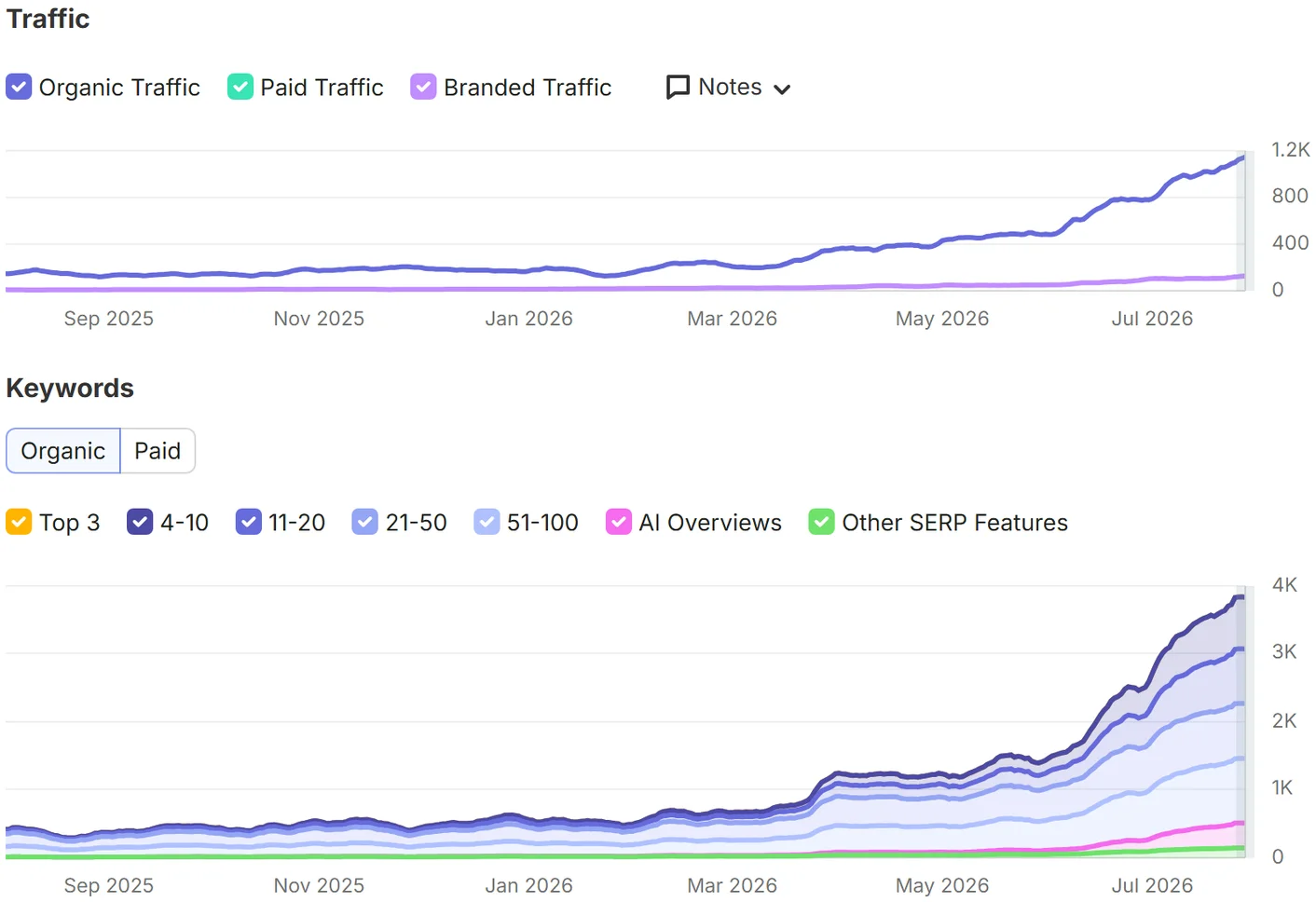
By month 12, the library was associated with 4,224 informational keywords in the recorded toolset, while the internal coverage index moved from 23 to 36. The decision-useful point is the architecture: each article answered a distinct research need and linked toward the most relevant commercial or guide page instead of creating another competing collection URL.
Keep entity information and claims internally consistent
Organization and product markup were cleaned up, author and reviewer references were made consistent, and short summaries were added where a reader could benefit from a direct answer. Those changes were treated as clarity work. The case does not claim that structured data or a particular answer-block format is an official ranking factor or a guarantee of visibility in Google AI features.
Editorial review used the store's already approved product and policy language as the boundary. Drafts that implied unsupported health outcomes were revised before publication. This limited what could be said, but it also kept the expanded content set aligned with the evidence available to the store.
Link activity remained limited and began in month 4, with recovered placements appearing around month 7. Referring domains are recorded as moving from 26 to 69 and domain rating from 14 to 25 over the period. Those changes are relevant context, but the case cannot isolate the share of ranking movement attributable to links versus architecture, content, seasonality, or other factors.