The engagement used connected workstreams, but the useful point is not the list of tactics. It is the dependency order: remove technical ambiguity, assign intent ownership, strengthen the commercial pages, build supporting coverage, and then reinforce authority and entity clarity.
1. Technical cleanup and indexation control (months 1 to 3)
The opening stage focused on crawl and indexation triage, canonical and redirect cleanup, template duplication, render checks, internal status codes, and schema validation. The purpose was to make later ranking movement interpretable. If priority URLs are competing with duplicated or low-value variants, adding content makes the signal harder to diagnose rather than easier.
2. Architecture and internal linking (months 2, 3, 5)
Overlapping pages were mapped by intent, weak duplicates were merged or redirected, and internal paths were revised so pages designed to generate inquiries were easier to reach. Anchor text was varied descriptively instead of repeated mechanically. The decision rule was one primary owner for each meaningful commercial intent, with supporting pages feeding context rather than competing for the same query.
3. Commercial intent alignment (months 2 to 4)
Rewrite briefs were built from the observed SERP shape for each priority query. Commercial pages were reorganized around the decision a searcher was making, with genuine service details, relevant comparison context, and answer sections where the page could support them. Supporting articles were planned to reinforce these destinations rather than become isolated traffic pages.
4. Supporting topic coverage
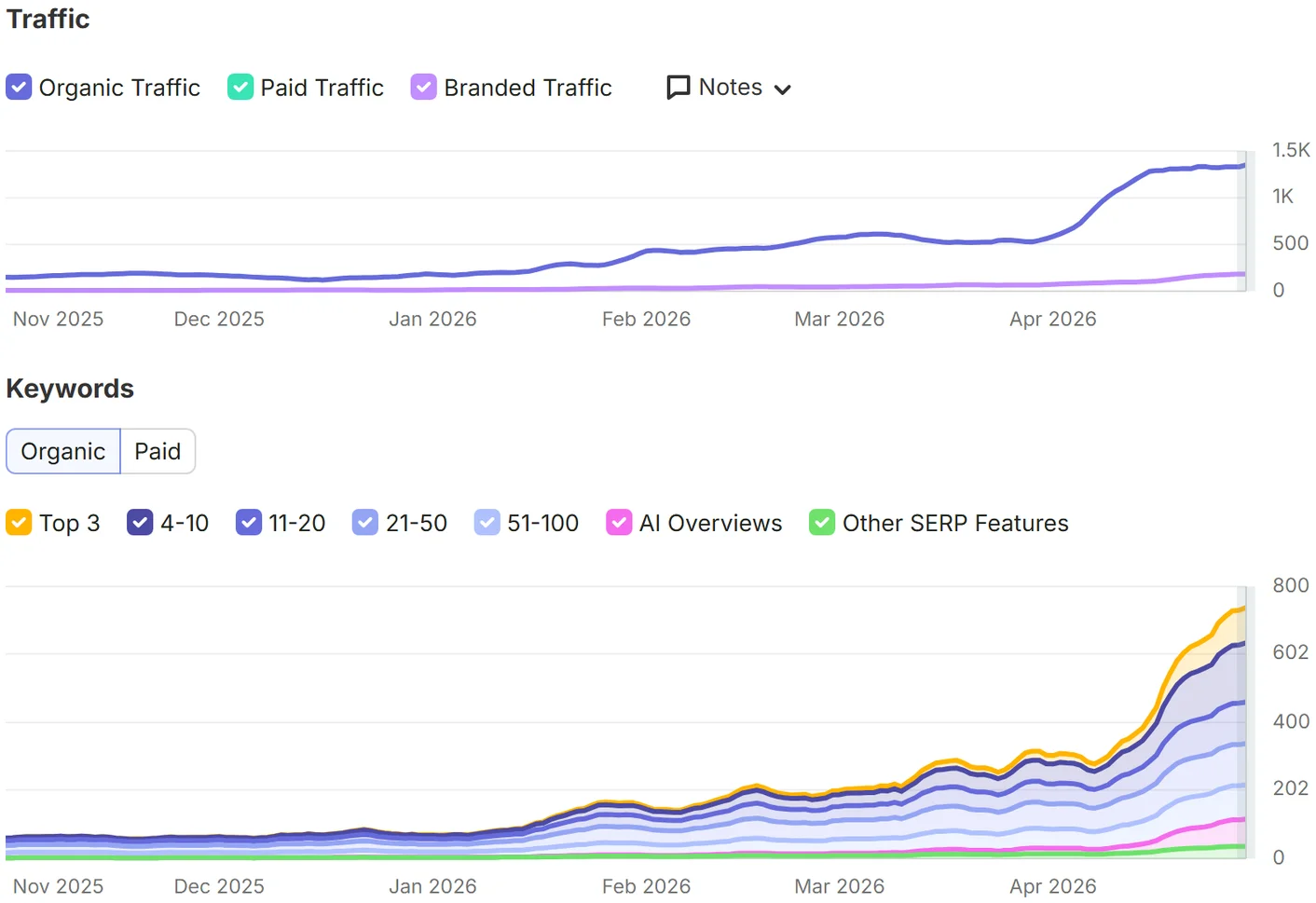
The modeled content library reached 30 articles across 7 topic clusters, covering homeowner research around electrical safety, faults, emergency situations, wiring, upgrades, installations, quoting, hiring, and certification. By the end of the observation window, the site was recorded as ranking for roughly 775 informational keywords, while the internal topical authority index changed from 26 to 69.
Those figures do not prove a universal causal law. In this case, the useful operating model is that a broader set of relevant pages created more internal contexts from which the commercial pages could be referenced. That can help clarify topical relationships and distribute internal equity, while the commercial pages remain the destinations built around service and inquiry intent.
5. Entity clarity and AI-ready summaries (months 3 to 5)
Organization and Service schema were cleaned up, author and reviewer references were aligned, citation consistency was checked, and concise summary blocks were added where the page could support the answer directly. The goal was clarity for readers and machine systems, including Google AI Overviews and other AI features, without implying that a particular markup pattern guarantees inclusion.
6. Gradual authority work and editorial QA (months 1 to 6)
Authority work remained incremental: lost-link recovery, citation cleanup, unlinked mention prioritization, and selective relevant placements. Editorial QA ran alongside it so unsupported service or performance claims were stopped before publication. The case does not treat either activity as a shortcut around weak page intent or weak site architecture.
What the data can and cannot show
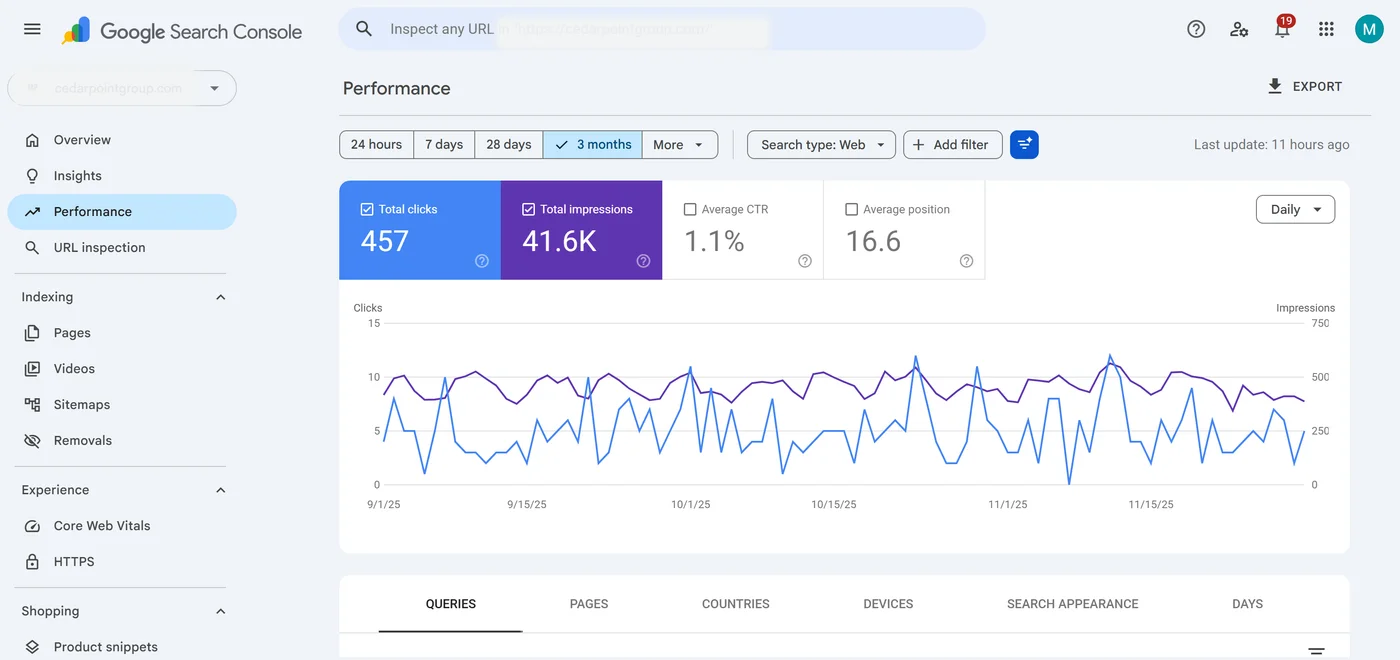
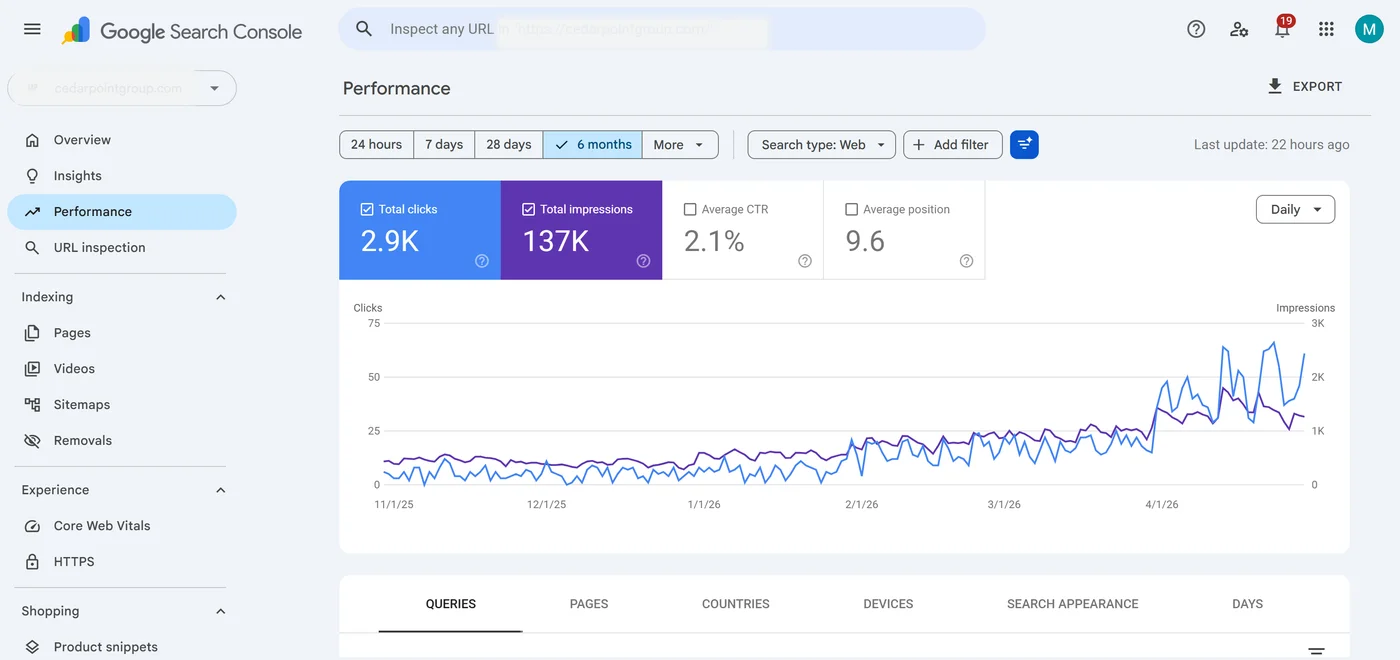
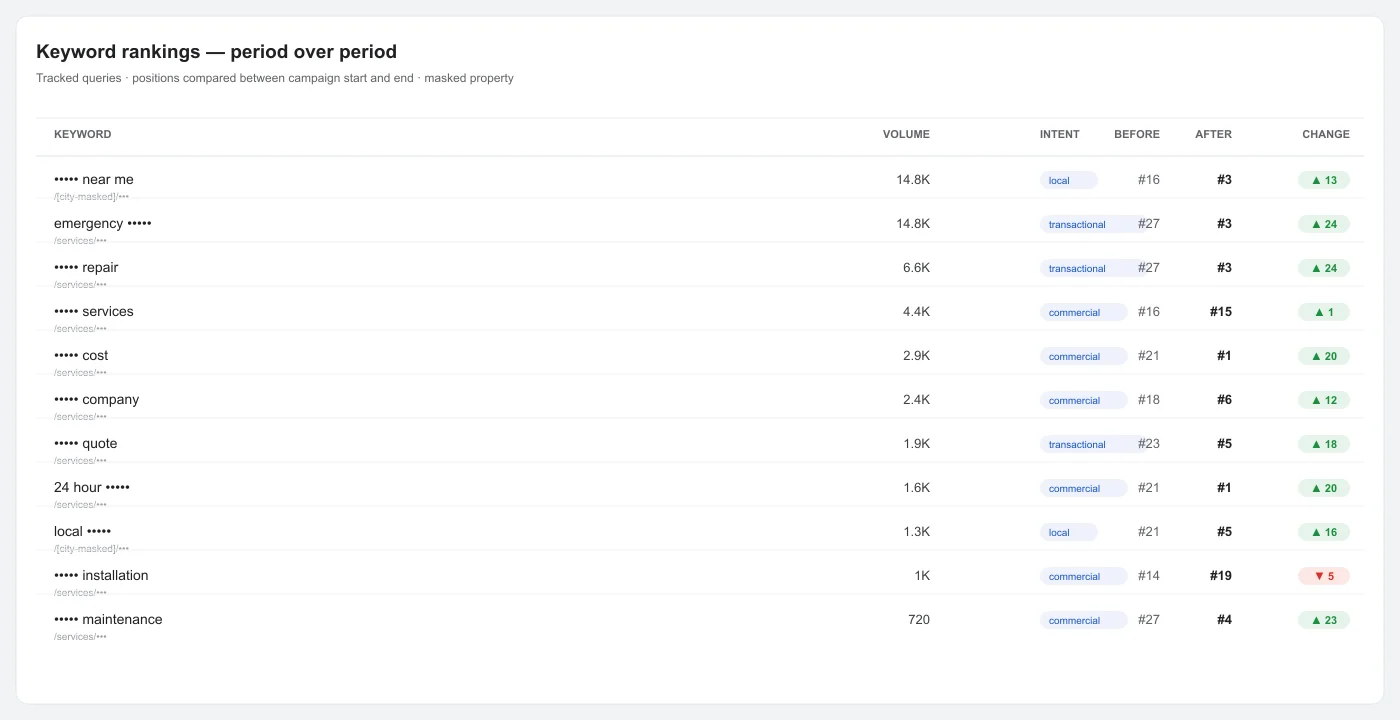
Clicks, impressions, positions, sessions, and conversions are presented as Search Console- and analytics-style measurements within the modeled case. Visibility and link measurements come from a third-party SEO context. Revenue remains modeled from average job value rather than reconciled CRM attribution, which is why this page uses the figures for directional interpretation rather than audited financial reporting.