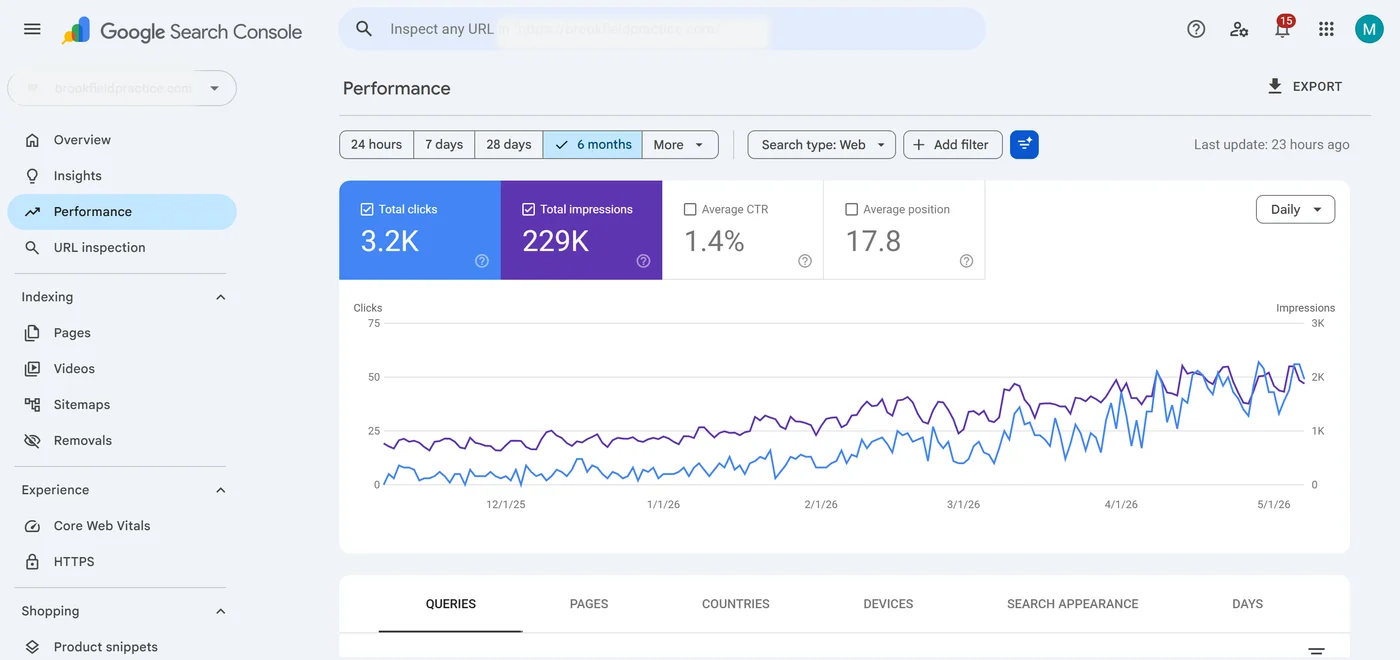
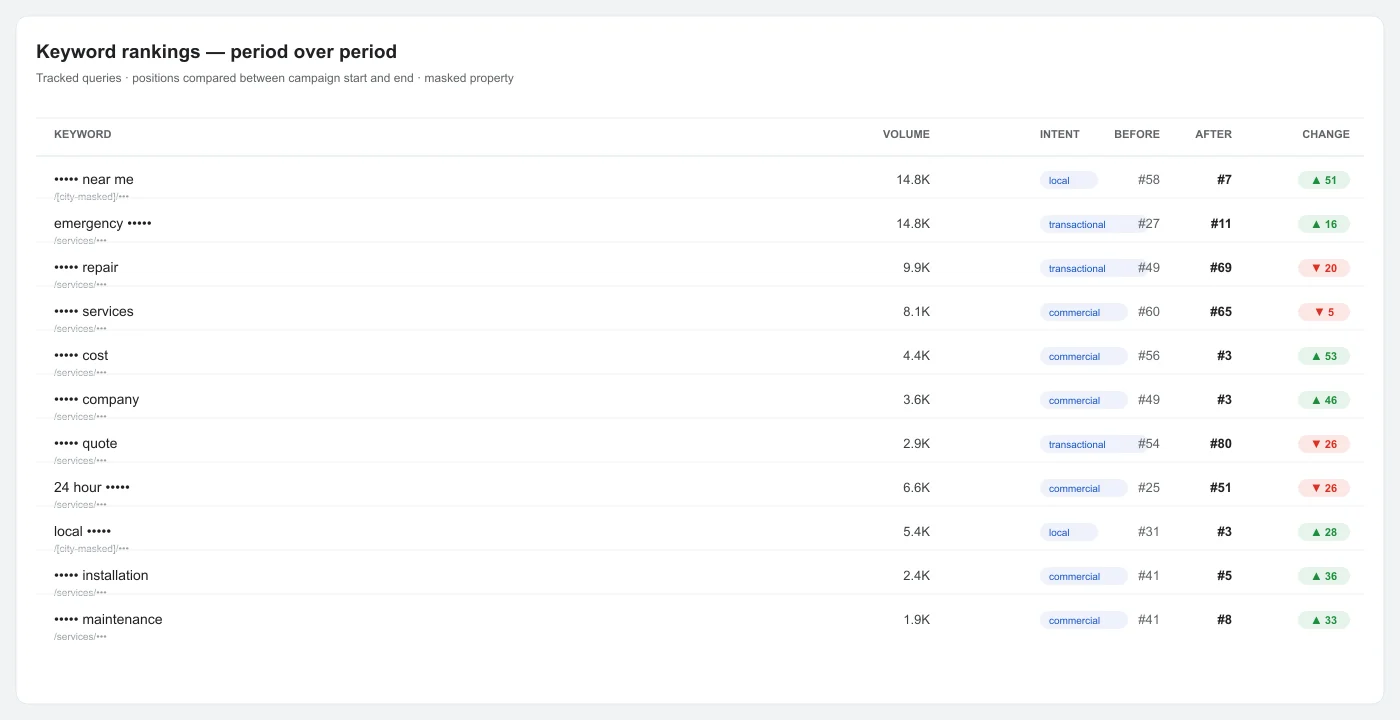
The work was organized into six connected streams, with each stage intended to support the next rather than operate independently.
1. Clean the technical base before adding scale (months 1 to 3)
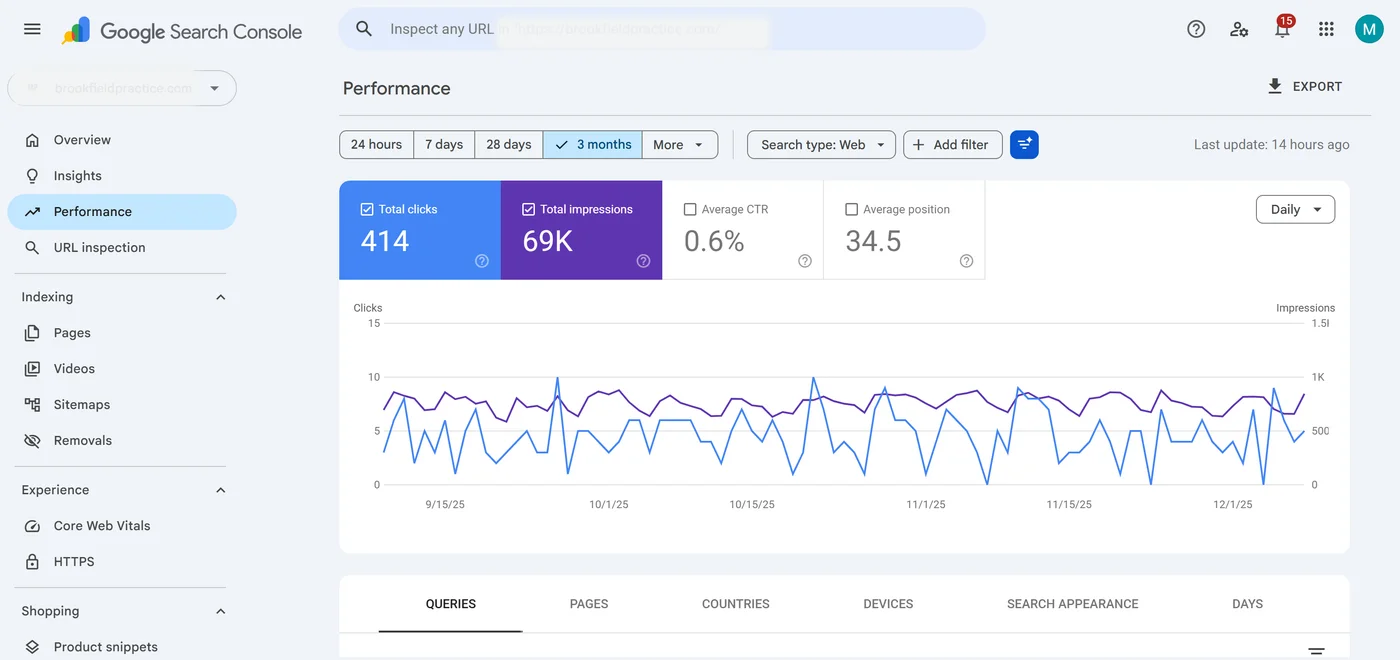
Crawl and indexation triage came first, followed by canonical and redirect cleanup, template duplication review, and checks on rendering, internal status codes, and schema. Average position changed from 34.5 toward 22.9 by the end of month three. That timing is consistent with cleaner page ownership, but the case does not treat it as proof that technical work alone caused the movement.
2. Separate intent and build supporting coverage (months 2 to 4)
Target queries were grouped by actual search intent so emergency, commercial comparison, and general service demand did not all depend on one page. Around those money pages, the team organized supporting content into 7 topic clusters covering emergency response, repair and diagnostics, installation and replacement, routine maintenance, pricing, water heaters and fixtures, and drains and blockages.
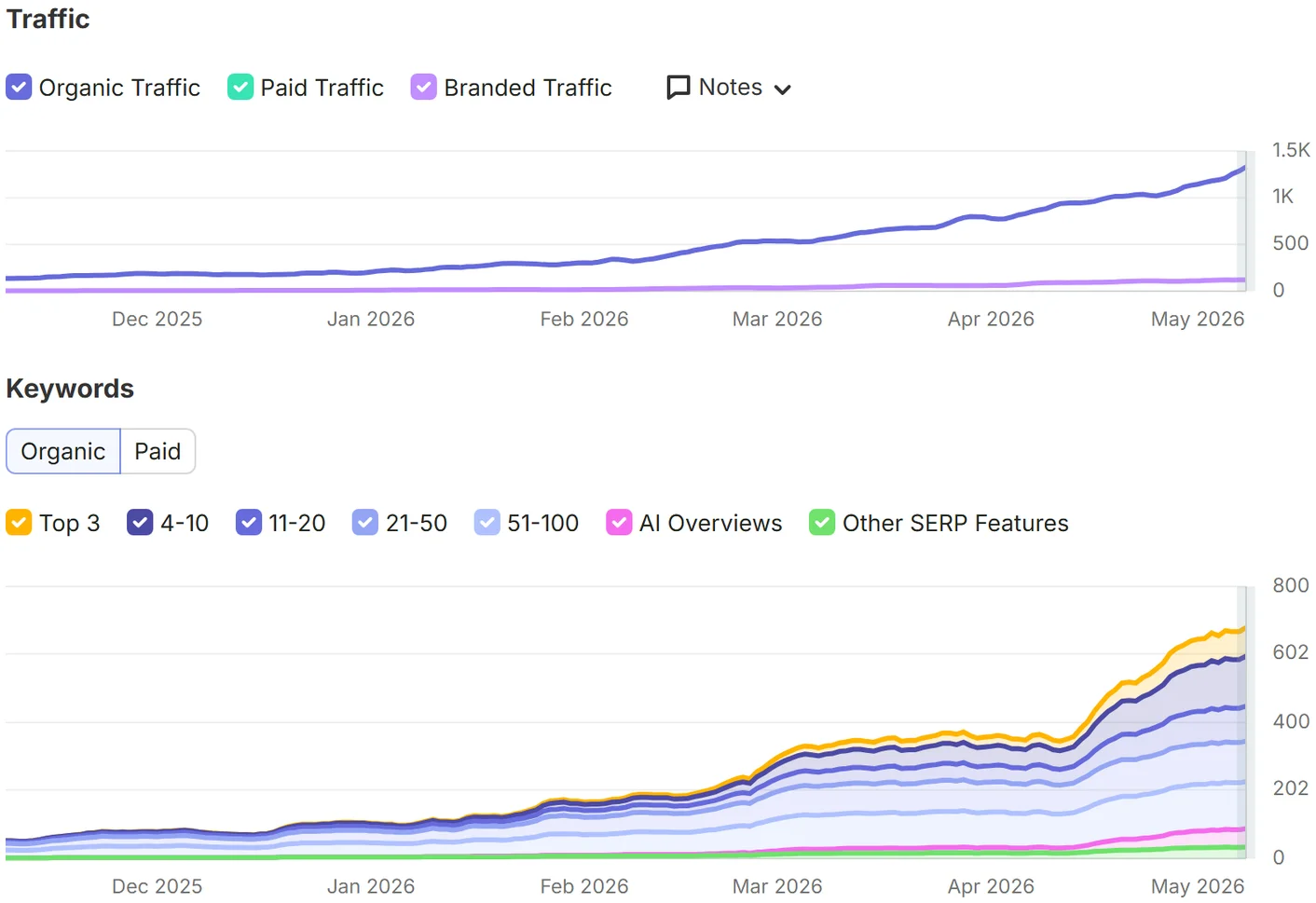
The content program reached 31 articles. The internal topical authority index moved from 23 to 63, and the modeled dataset recorded roughly 789 informational keywords. The index is an internal coverage measure, not a Google metric. Its decision value is that it shows the site's subject coverage broadening while the commercial architecture became clearer.
3. Use internal links to reinforce the intended destinations (months 2, 3, 5)
Overlapping pages were consolidated, weaker duplicates were redirected, and cluster articles were linked toward the commercial page that best matched the reader's next decision. This reduced competing signals and made the path from informational research to a conversion page easier to follow.
4. Improve entity clarity without claiming special AI treatment (months 3 to 5)
Organization and Service schema were cleaned up, author and reviewer references were aligned, citation consistency was checked, and concise answer blocks were added where they improved readability. These changes can make content easier for Google AI features and other assistants to interpret, but they do not create a guaranteed AI citation or ranking benefit.
5. Add authority gradually (months 4 to 6)
Lost-link recovery, citation cleanup, unlinked-mention work, and selective outreach were used instead of indiscriminate link volume. Referring domains moved from 26 to 42 and DR from 14 to 19. Those are third-party measures; use them to track the authority trend, not as a Google metric.
6. Keep public claims within what the approved evidence supports (months 1, 2, 4)
Editorial review checked language before publication so service pages did not invent credentials, outcomes, or trust claims. That guardrail was part of the operating model, not a cosmetic editing step.
Methodology and sources: the case combines search-console-style performance data, analytics-style traffic and conversion data, third-party ranking visibility, and backlink-index measures. The dataset is masked synthetic modeling built to stay internally coherent, so each reported result shows how these metrics move together within one scenario; use it to plan your own sequencing rather than as a public export from a named client.