The engagement used a sequence of coordinated workstreams. The order matters because later editorial and authority work is easier to evaluate when indexation, destination pages, and navigation are already clearer.
1. Technical cleanup and indexation review (months 1 to 3)
The first workstream audited crawl paths, indexation signals, canonicals, redirects, template duplication, renderability, Core Web Vitals, structured data, and internal status codes. The practical goal was to reduce avoidable technical ambiguity and make sure priority family law pages were accessible, indexable where appropriate, and not competing with accidental duplicates. No technical check was treated as a guaranteed ranking lever.
2. Search-intent alignment and authority content (months 2 to 4)
Commercial pages were reviewed against the intent visible in the search results and against the questions a prospective family law client would need answered before making contact. Rewrite briefs focused on page purpose, evidence boundaries, clarity, and the next useful action. Supporting content was planned around research needs rather than around a quota.
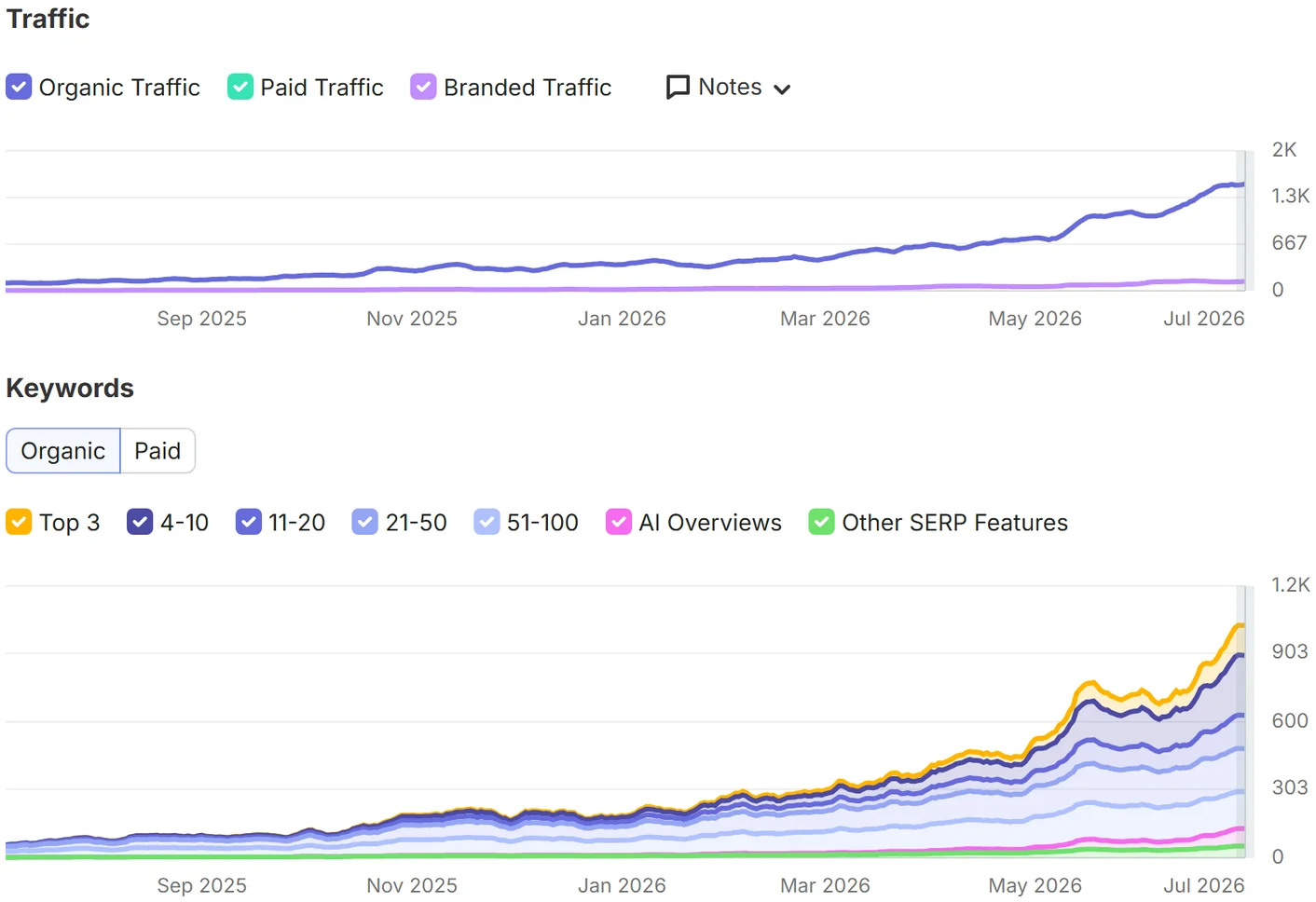
The recorded program produced 63 articles across 8 topic clusters. The subjects covered areas such as separation, parenting arrangements, property and financial issues, support, protective legal options, relationship agreements, court-process questions, and consultation expectations. The scenario later recorded an estimated 1,159 informational keywords, while an internal topical-coverage index moved from 23 to 71. That index is an internal planning signal, not a Google metric.
The operating logic was straightforward: useful supporting pages can earn their own visibility, answer early-stage questions, and provide relevant contextual links to service pages. That does not prove that adding informational pages causes commercial rankings to rise. It does, however, create a clearer site structure and a broader set of relevant documents that can be evaluated together.
3. Information architecture and internal linking (months 2, 3, 5)
The architecture work grouped related family law information, clarified parent-child relationships between pages, used descriptive anchors, consolidated overlapping URLs, and shortened routes to consultation or service destinations. A dedicated location page was only a candidate where there was a genuine location and useful location-specific information; a nominal service area by itself was not treated as sufficient reason to create one.
4. Entity clarity, structured data, and AI answer readability (months 3 to 5)
Organization and Service structured data were reviewed for consistency with visible page content, while author and reviewer information was aligned with what the site could substantiate. Summary passages were written so readers could understand the answer quickly and so current search and AI systems could parse the content more easily. There is no special markup requirement that guarantees inclusion in Google AI Overviews or citation by ChatGPT, Claude, Perplexity, or another assistant, so this work was treated as clarity and evidence hygiene rather than a placement promise.
5. Citation cleanup, link recovery, and selective outreach (months 4 to 6)
The authority work prioritized recoverable lost links, relevant citation consistency, credible unlinked mentions, and selective resource outreach. The scenario records referring domains moving from 42 to 69 and Domain Rating from 15 to 25. Domain Rating is a third-party metric, and the movement is observational; it should not be interpreted as a direct cause of the search results shown elsewhere.
6. Editorial QA and claim control (months 1, 2, 4)
Public-facing legal content was checked against approved source material, page purpose, tone, and claim boundaries before publication. The review process focused on removing unsupported superlatives, avoiding implied legal outcomes, and distinguishing general educational information from advice that depends on facts, jurisdiction, or professional judgment.
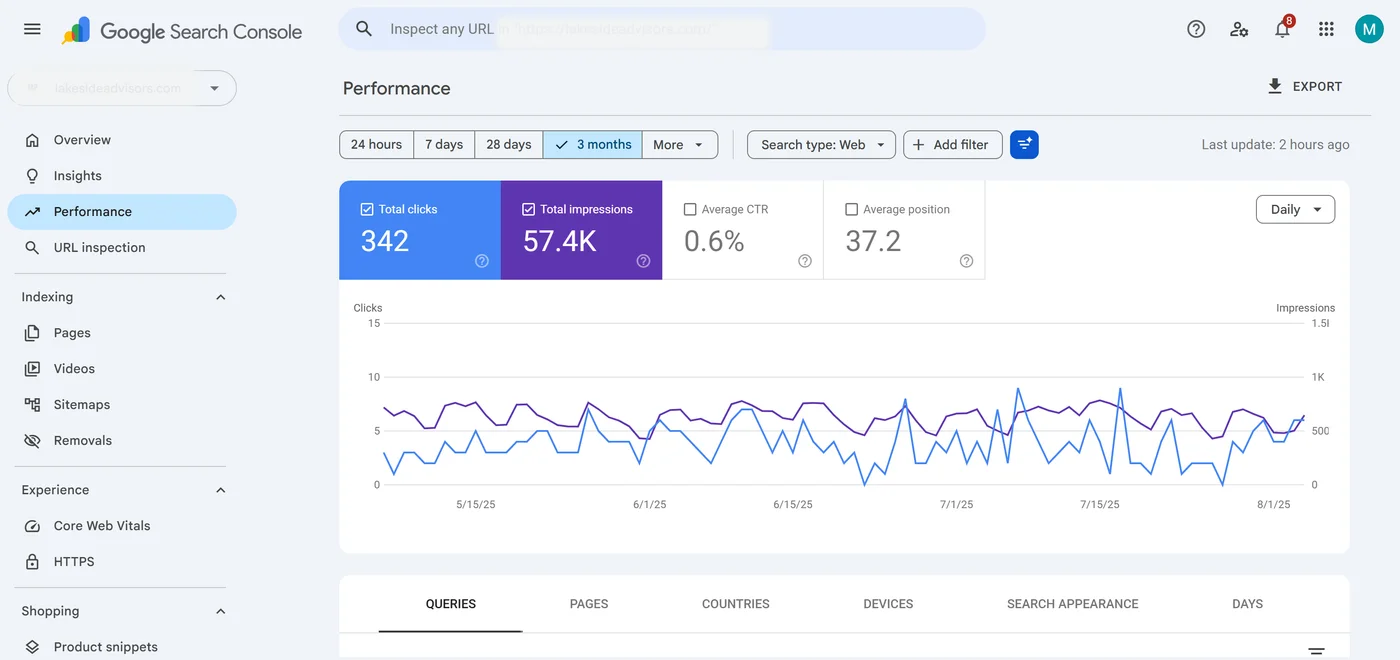
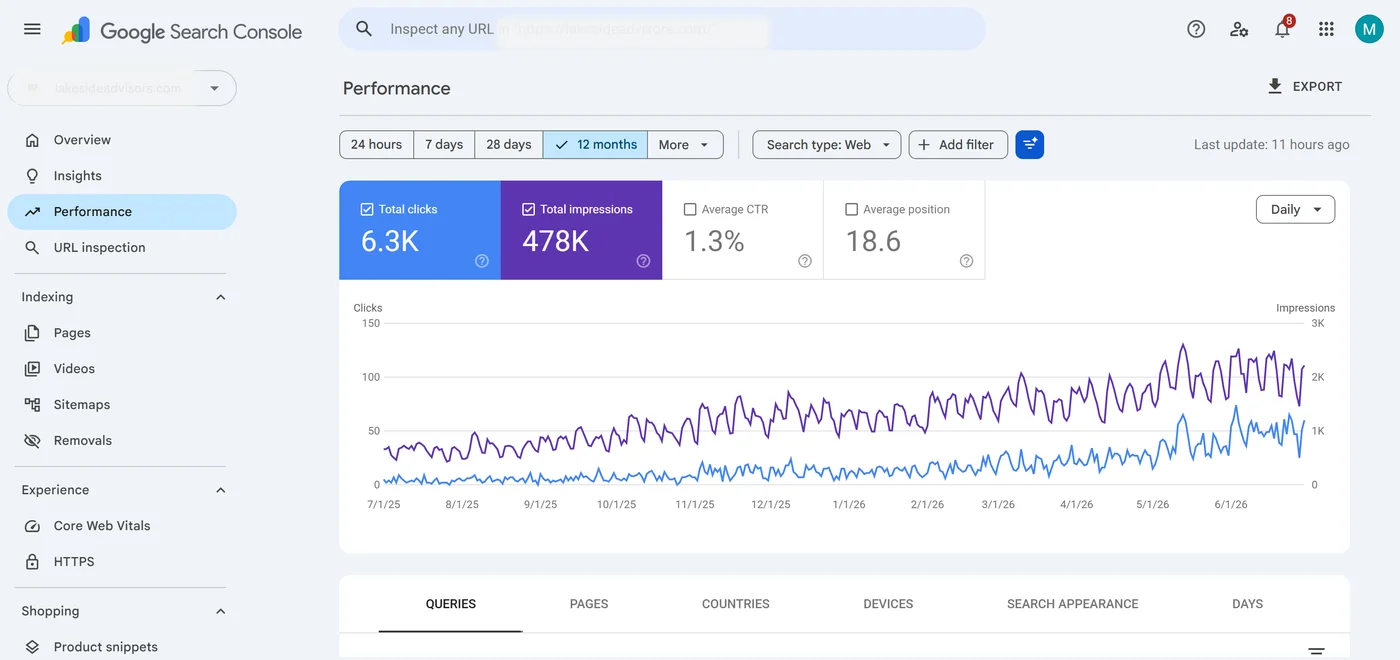
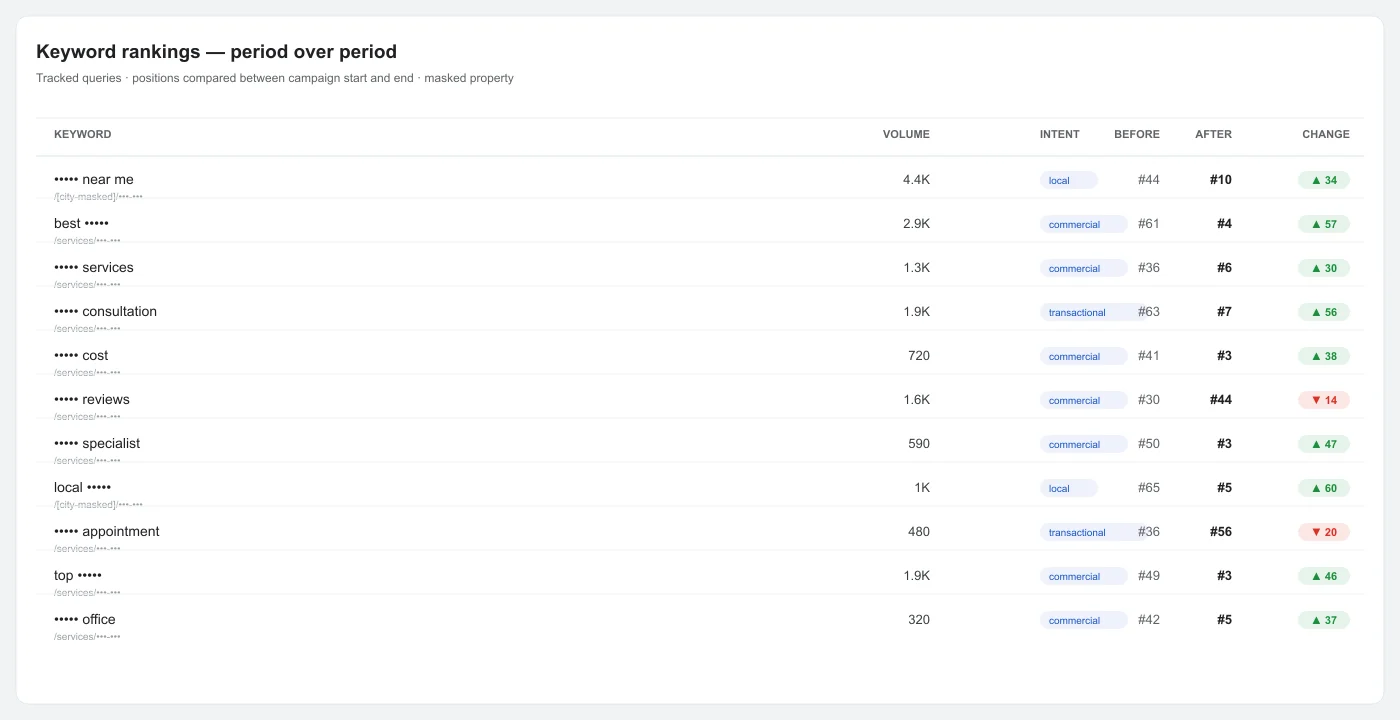
Measurement note: Search Console supplied search-performance fields, analytics supplied session and conversion fields, and a third-party tool supplied authority and visibility fields. Case value is internally modeled. The dataset is coherent for this anonymized scenario but is not presented as a verified third-party export.