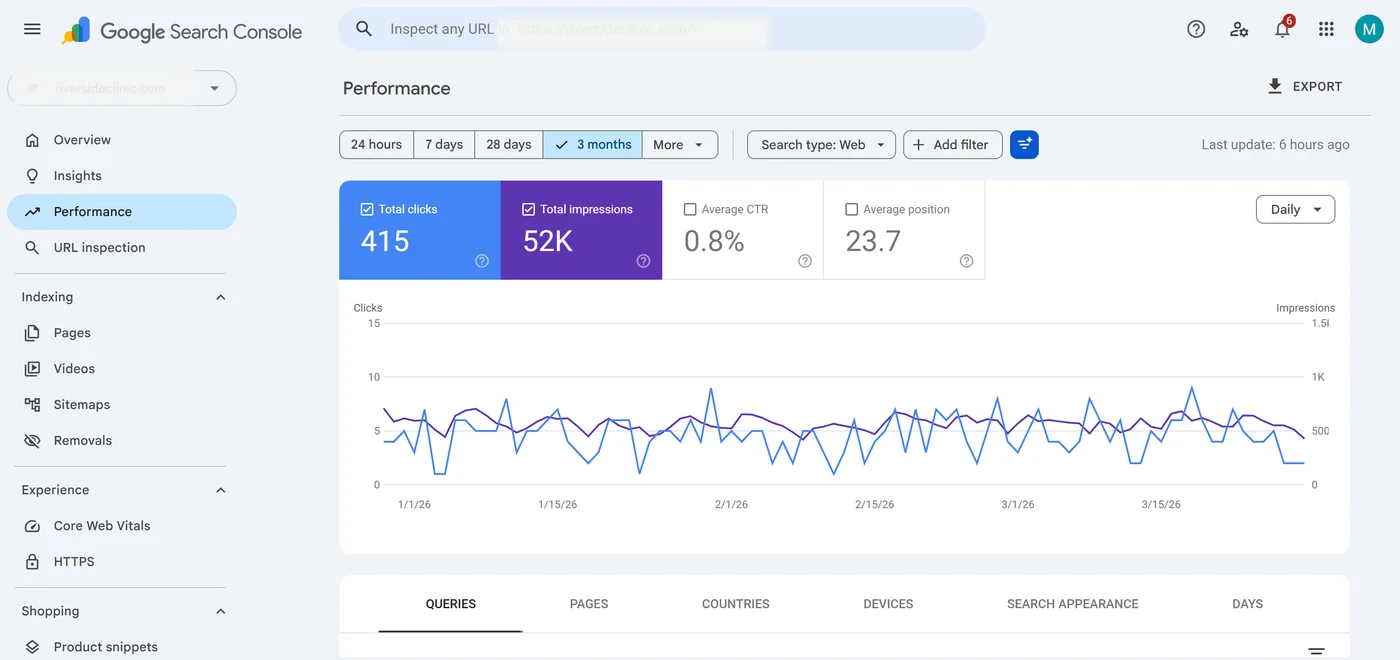
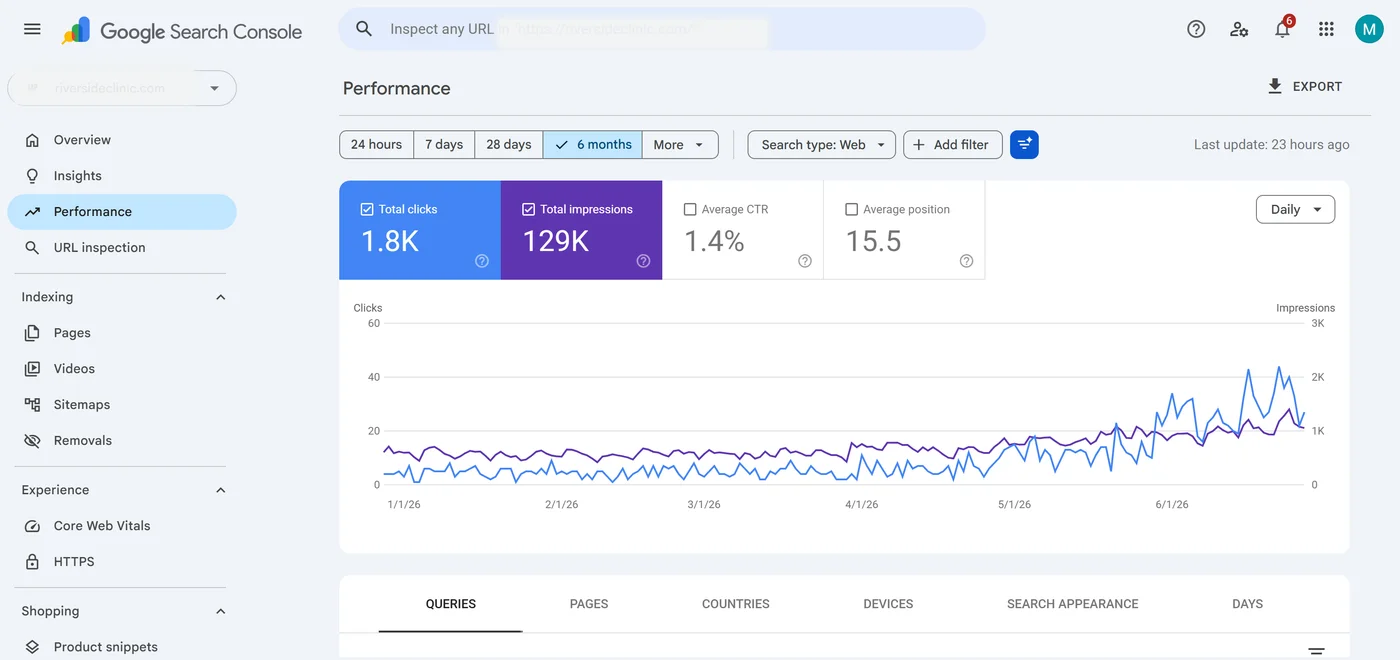
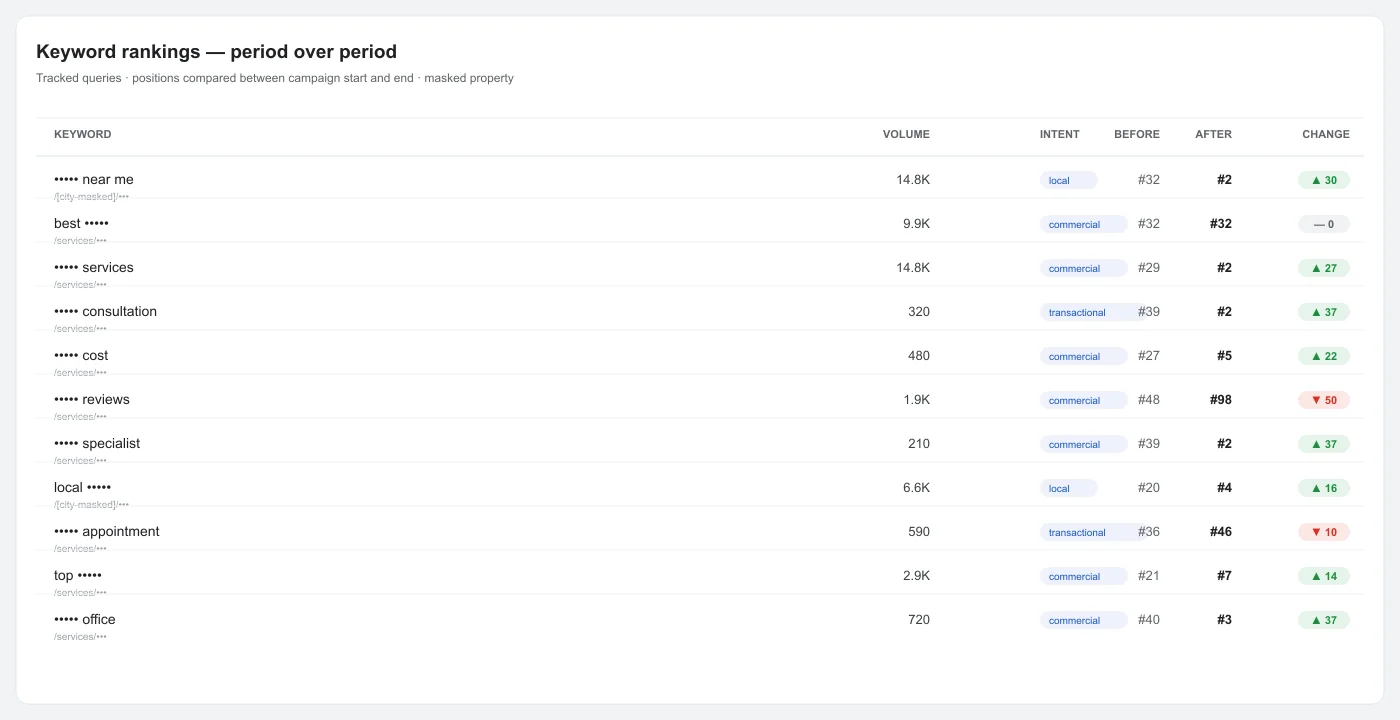
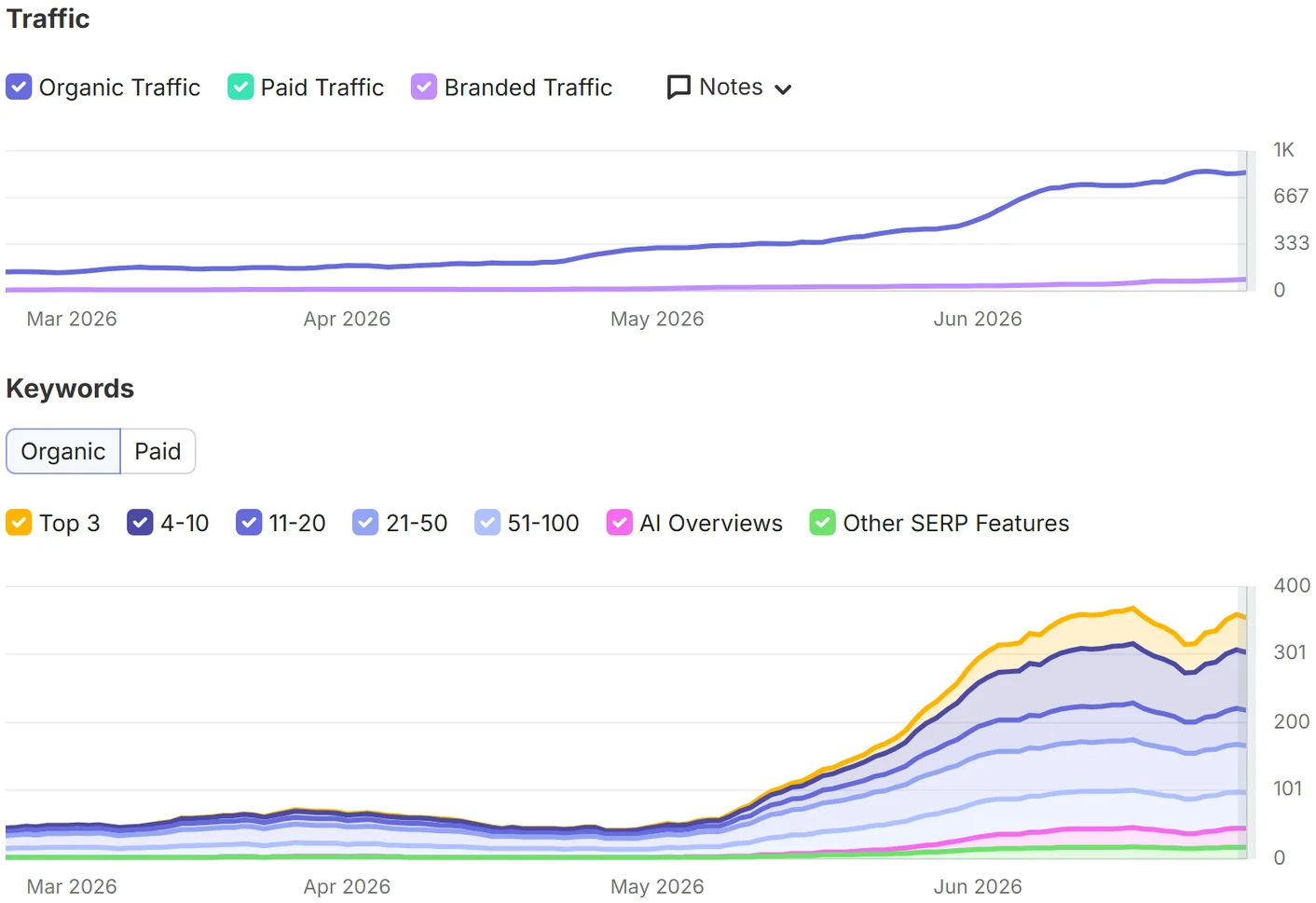
The work was organized as six connected streams, with each stream beginning only when the earlier dependencies were sufficiently clear.
Technical SEO and indexation cleanup: months 1 to 3
The first pass covered crawl and indexation triage, canonical and redirect review, template duplication, Core Web Vitals and renderability checks, schema review, and internal status codes. The aim was not to claim that any one technical item would create rankings. It was to remove avoidable ambiguity before the site expanded.
Authority content and intent alignment: months 2 to 4
Priority queries were grouped by what a visitor was actually trying to accomplish, and the existing pages were assessed against those needs. Across the recorded campaign, the site added 20 articles across 6 topic clusters, covering first-visit questions, service information, community and outreach activity, life events, giving and membership, and beliefs or frequently asked questions. The scenario later recorded 217 informational keywords, while an internal topical authority index moved from 37 to 76.
The useful operating principle is that supporting content should earn its place. Each article should answer a distinct question, help a person understand the organization, and create a contextually sensible path to a related priority page. Internal links are valuable when they improve navigation and clarify relationships between topics; they should not be treated as a mechanical ranking formula.
Information architecture and internal linking: months 2 to 4
Related pages were grouped into clearer hubs, anchors were distributed naturally, overlapping pages were consolidated where appropriate, conversion paths were shortened, and orphan or weak pages were reviewed. The goal was a site where a newcomer could move from an informational answer to the relevant service, visit, event, or contact page without guessing.
Entity, schema and AI presence: months 3 to 4
Organization and Service schema was reviewed for consistency with visible page content, author and reviewer references were aligned where they already existed, citations were checked, and concise summary blocks were added where they improved readability. This work can make the site's meaning easier to interpret, but it does not create a special entitlement to Google AI Overviews or citations in AI assistants.
Digital PR and link recovery: month 4
After the structure was clearer, the plan moved to lost-link recovery, citation cleanup, and selective outreach to relevant sources. The objective was steady reinforcement rather than a sudden jump in referring domains.
Brand voice and editorial QA: months 1, 2, 4
Editorial review checked that public descriptions matched approved organizational information, that sensitive wording was not overstated, and that pages stayed useful to visitors rather than reading like search-engine copy.