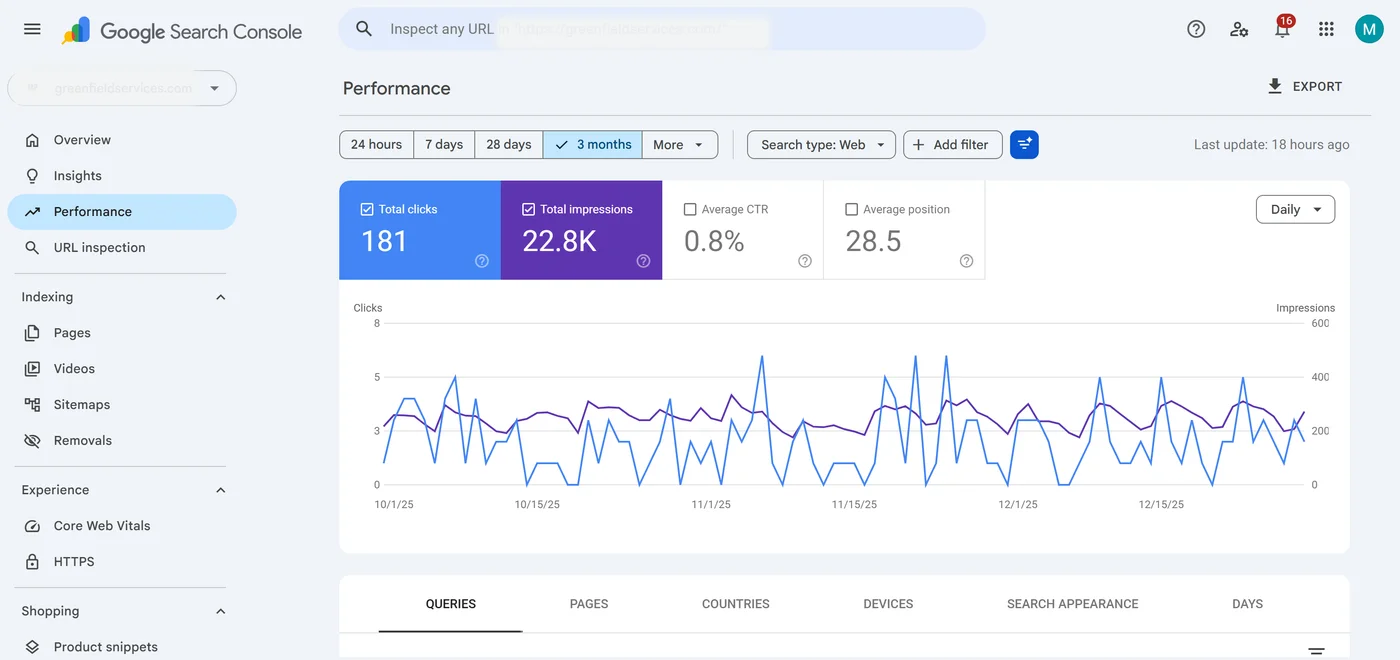
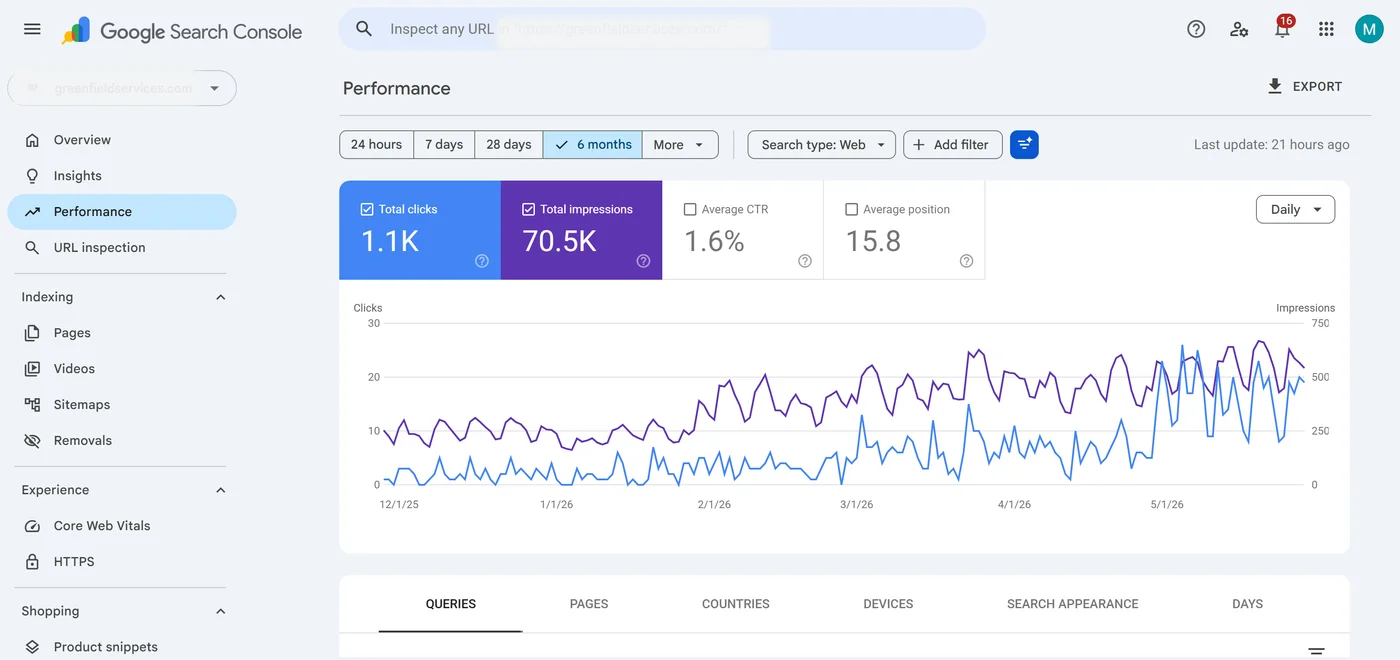
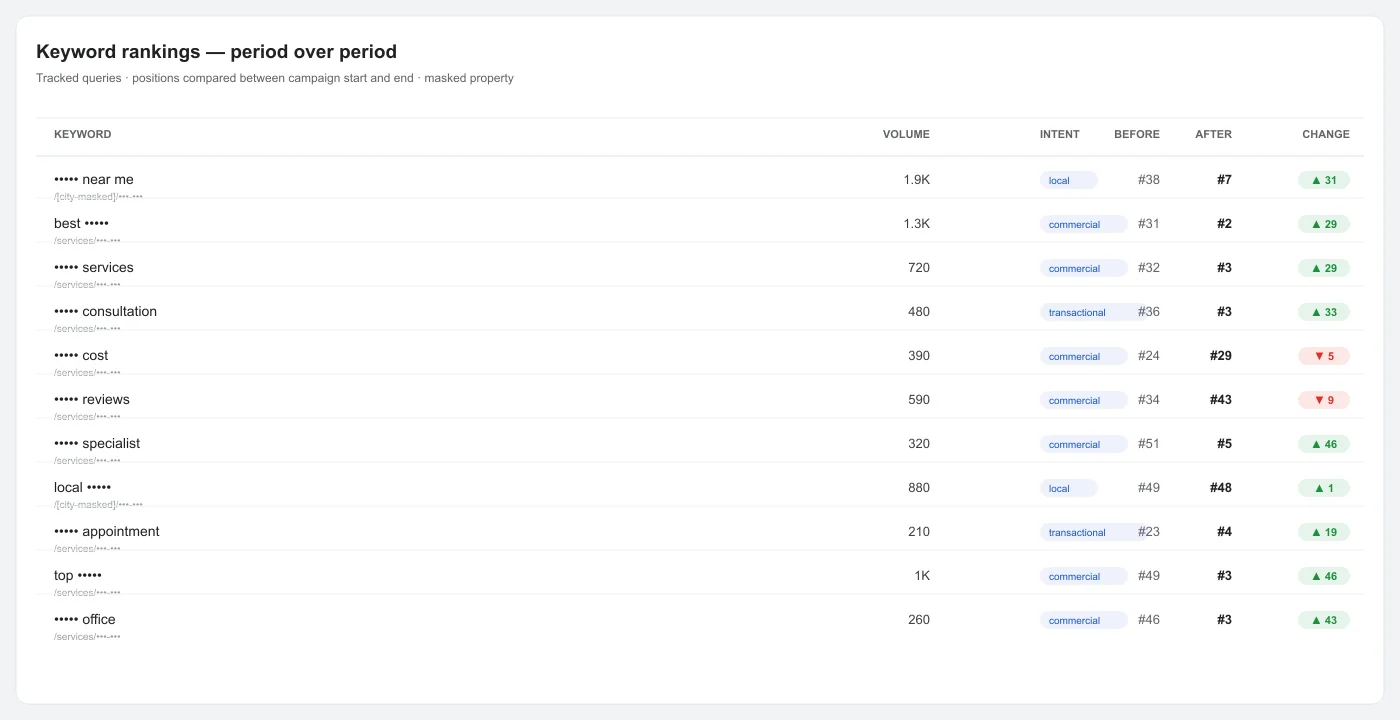
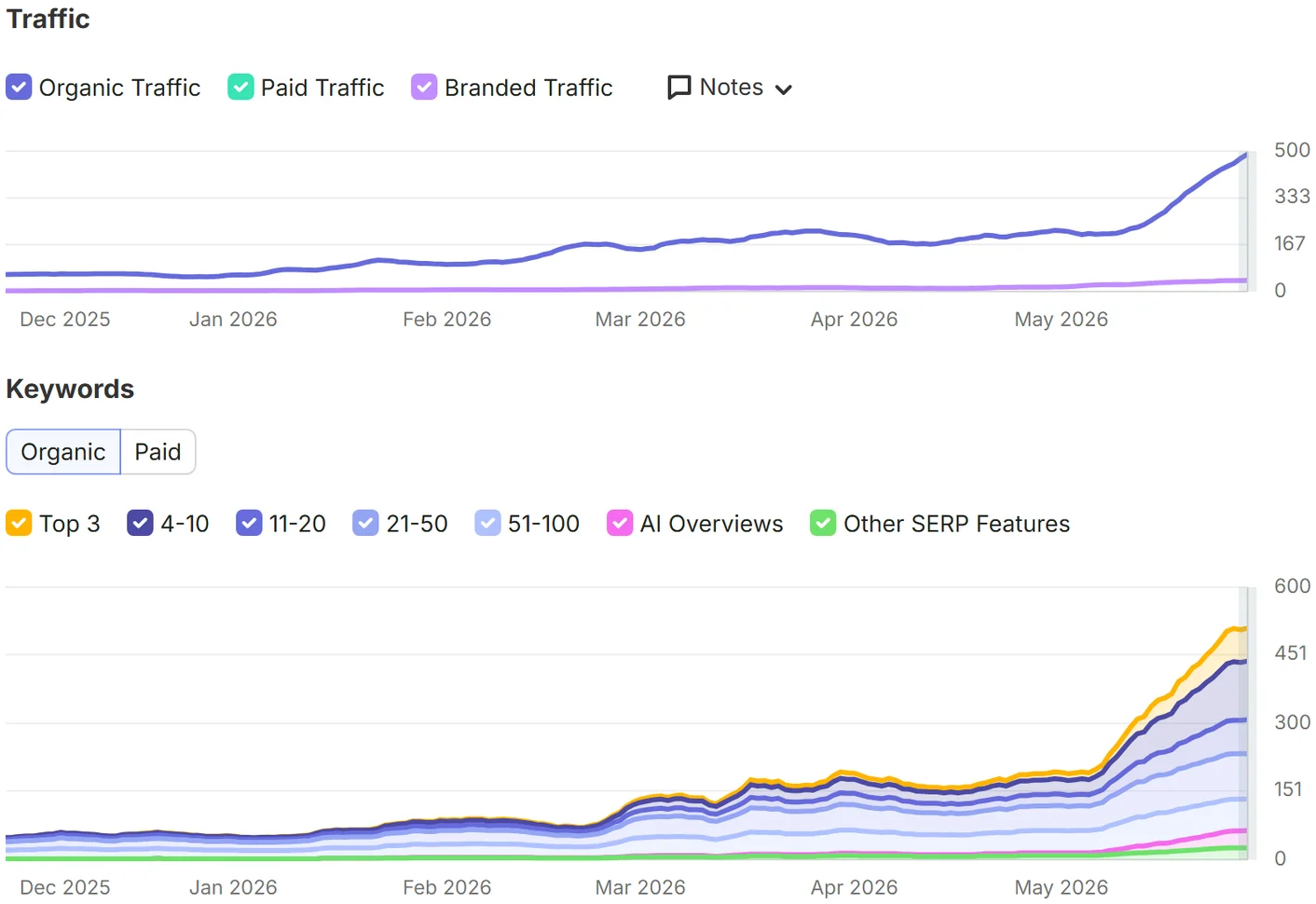
The program used connected workstreams in a deliberate order so later editorial work rested on a cleaner technical and structural base.
1. Technical SEO and indexation cleanup (months 1 to 3)
The opening stage covered crawl and indexation triage, canonical and redirect review, template-level duplication, and validation of schema and internal status codes. The measured average position moved from 28.5 to 29.8 during this period. That short-term movement is best treated as an observation during consolidation rather than proof that redirect work caused it.
2. Authority content and intent alignment (months 2 to 4)
The editorial plan was organized around the questions consulting buyers ask before contacting a firm. The program produced 30 articles across 7 topic clusters covering engagement scope, fees, firm selection, industry-specific advisory, onboarding, measurement, and local or regulatory context. Each support page was given a clear purpose and a relevant route toward the commercial page it supported.
The modeled topical-authority index moved from 28 to 69 over the study window, while the site was associated with 592 informational keywords. Both figures come from the campaign's own tracking. Their value is in showing that broader subject coverage and commercial visibility developed together, not in proving a fixed cause-and-effect formula.
3. Information architecture and internal linking (months 2, 3, 5)
Hub-and-spoke mapping, contextual anchor distribution, consolidation of overlapping URLs, shorter paths to enquiry pages, and pruning of weak or orphaned pages were used to clarify page ownership. When two pages addressed the same commercial need, the stronger destination was retained and the weaker overlap was redirected where appropriate.
4. Entity, schema and AI presence review (months 3 to 5)
Existing Organization and Service schema was cleaned up, author and reviewer references were aligned, and citation consistency was reviewed. Summary blocks were written to answer buyer questions clearly without unsupported claims. This can make content easier for search engines and AI systems to interpret, but it does not create a special ranking or citation guarantee.
5. Digital PR, citations and link recovery (months 4 to 6)
External authority work stayed selective. The scenario records referring domains moving from 26 to 51 and domain rating from 14 to 21 while lost-link recovery, citation cleanup, unlinked-mention review, and resource outreach were quality-gated. Those third-party metrics are context for the link work rather than Google ranking inputs.
6. Brand voice and editorial QA (months 1, 2, 4)
Editorial review ran throughout the program. Claims, tone, and evidence boundaries were checked before publication so the firm did not rely on invented awards, fabricated proof, or unsupported performance language.